
United States > California > Carol Shelton > Terroirs & Vineyards
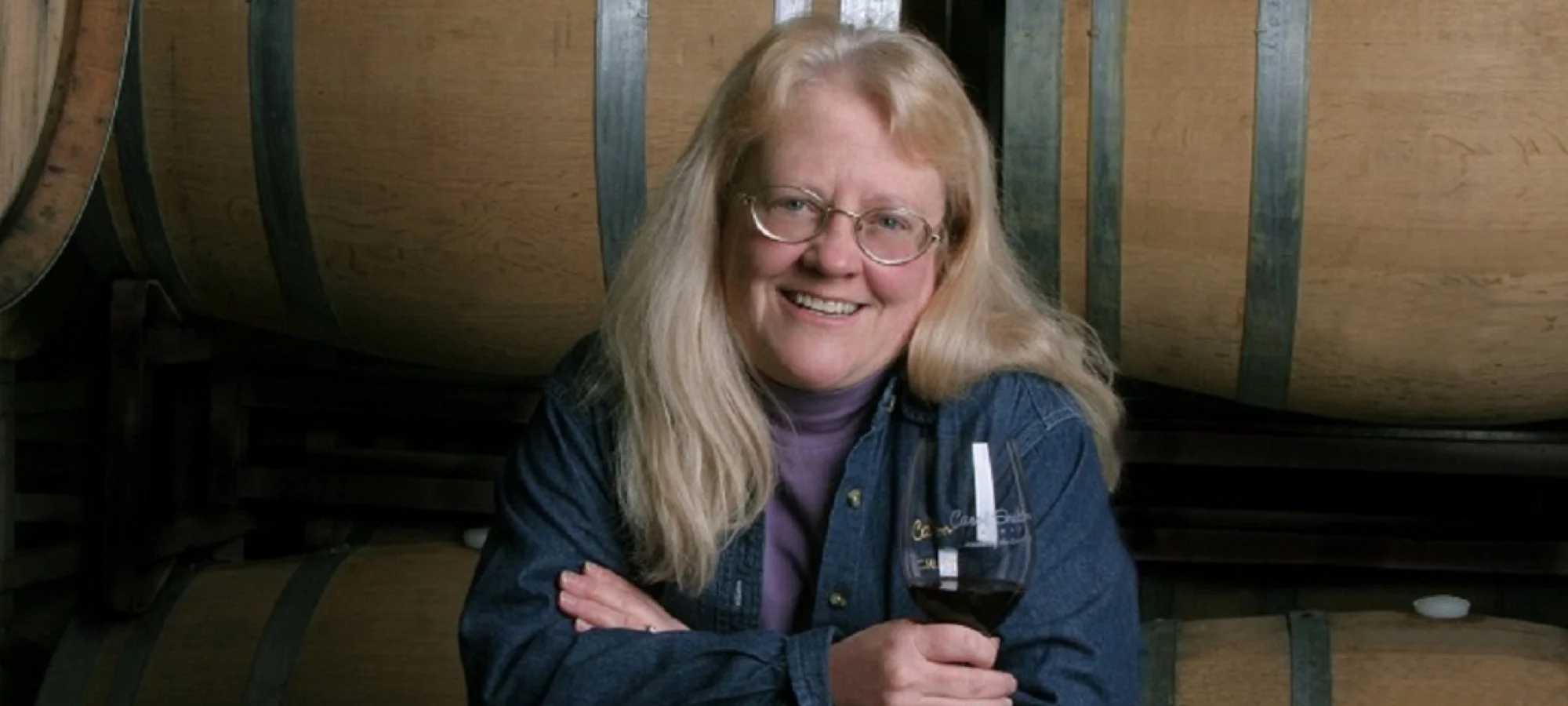
When it comes to seeking out cool terroirs, undiscovered vineyards, and iconic fruit, Carol is a regular bloodhound. With her over 40 years’ experience, she’s established relationships with the owners and growers of some of California’s most individualistic and sough-after vineyards, which combined with her winemaking savoir-faire, has resulted in her incomparible portfolio of unique and compelling wines from vineyards as far north as Mendocino all the way down to Cucamonga.
Mendocino
Established in 1984, the Mendocino AVA covers a vast area of 443 square miles. Of that, about 13% (35,000 acres) is suitable for wine grape production, and of that, some 11,000 acres is currently under vine. The V-shaped appellation includes the upper watersheds of both the Navarro and Russian Rivers. It’s a large region with a generally transitional (between maritime and continental) climate, characterized by a cool rainy season and a hot dry growning season. Soils are highly variable.
Cox Vineyard: Planted in 1956, the vineyards located in Mendocino County north of Ukiah. These old vines grow on gentle hills in rocky soils. The soil and temperature stress the vines just enough to produce rich jammy-peppery flavored zinfandel grapes. Zinfandel for Wild Thing Zin and Carignane for Rendezvous Rosé come from the here, where the indigenous yeasts found the Zinfandel grapes in the vineyard allow Carol to use a wild yeast fermentation, which led to the naming of Wild Thing Zin. In 2002, Cox Vineyard passed the rigorous CCOF standards for organically grown.
fountaingrove (sonoma county)
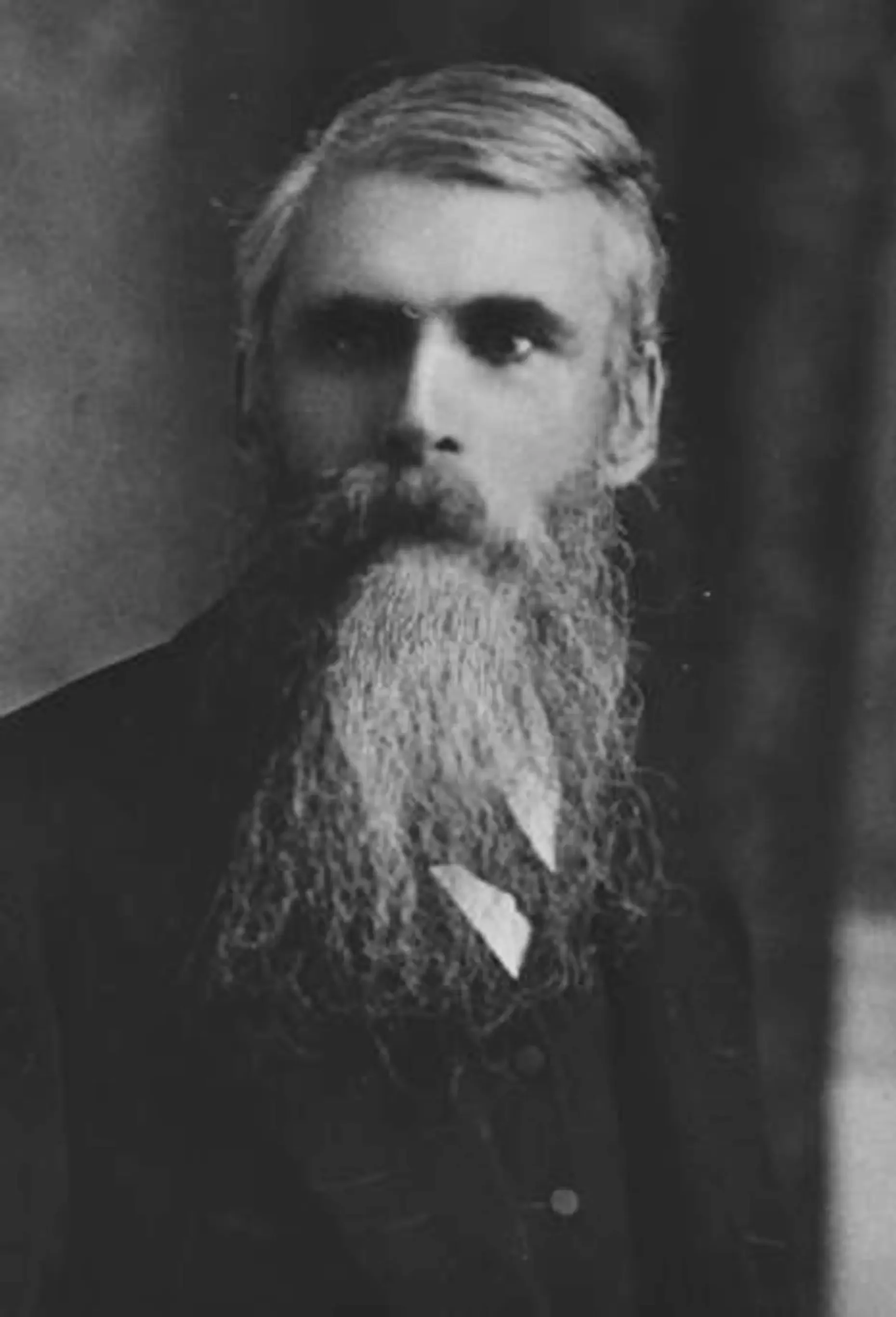
Thomas Lake Harris, founder of Fountain Grove
Fountain Grove was a utopian colony founded near Santa Rosa in Sonoma’s Mayacamas Mountains in 1875. Most of its settlers were followers of Thomas Harris's Brotherhood of the New Life and moved with Harris from their previous colony at Brocton, New York. Although nothing remains of the original community or its winery, the region’s unique character led to the establishment of the Fountaingrove AVA in 2015.
Bastoni Vineyard: owned by the Bastoni family and its descendants since 1906, the vineyard was replanted in 2005 to a blend of Zin, Petite Sirah and Alicante Bouschet. Averaging 145 ft elevation, the vineyards’ soil is Spreckles Loam, a sandy-loam soil common throughout lower elevations in Sonoma, developed on top of volcanic tuff soils originating from an ancient eruption of Mt Saint Helens. This is the source for Carol’s Karma Zin (in some vintages, Karma Red when teh Zin percentage falls below 80%).
Peaceland Vineyard: further up into the mountains at 1200 ft elevation lies this 200-acre (40 to vines) parcel owned by the Freidland family. Planted to Zin and Petite Sirah, Carol makes her Peaceland Zin from this site.
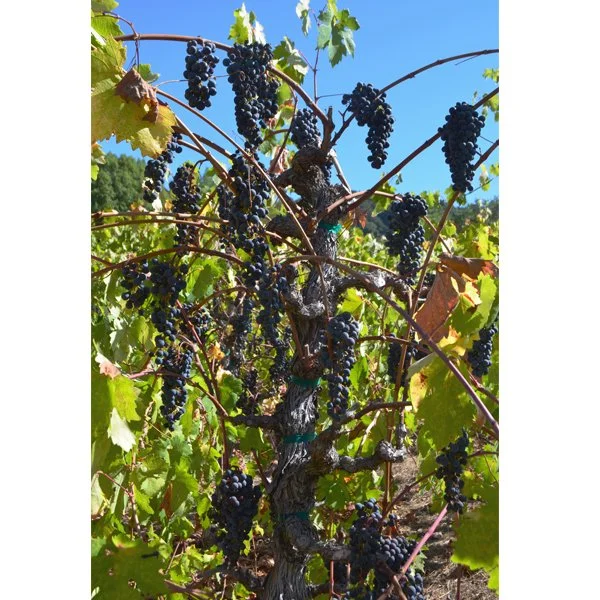
Headtrained Zin ripening at Peaceland
Placer County
A region of hills, river valleys and mixed volcanic/metamorphic soils within the Sierra Foothills AVA along the western flank of the Sierra Nevada Mountains. High elevation and cool nights mean ripeness with good acidity, and the soils impart interesting minerality to the wines.
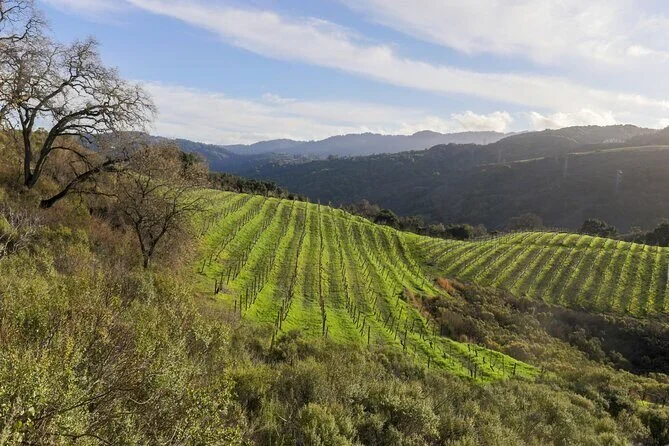
Damiano Vineyard: John & Joe Damiano’s small vineyared in Auburn at about 750 ft elevation is planted to mostly Viognier with a bit of Chard. Carol sources her bright, fresh Wild Thing Viognier from this little gem.
oakley district (contra costa county, Central coast)
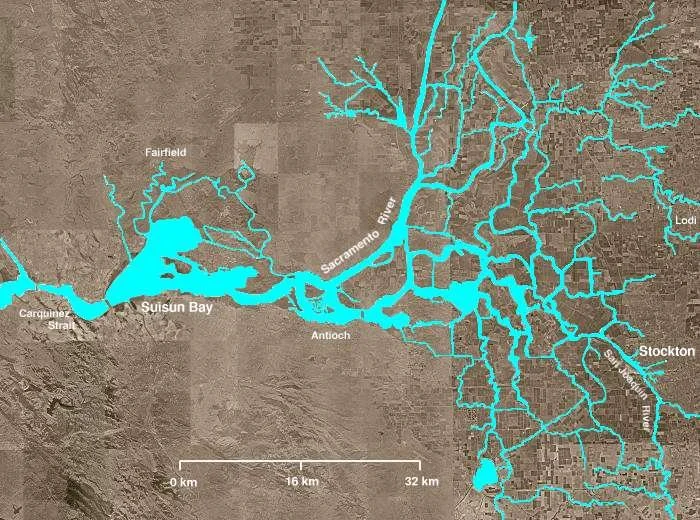
The Sacramento - San Joaquin Delta- SF off to the left.
Alexander Valley (sonoma County)
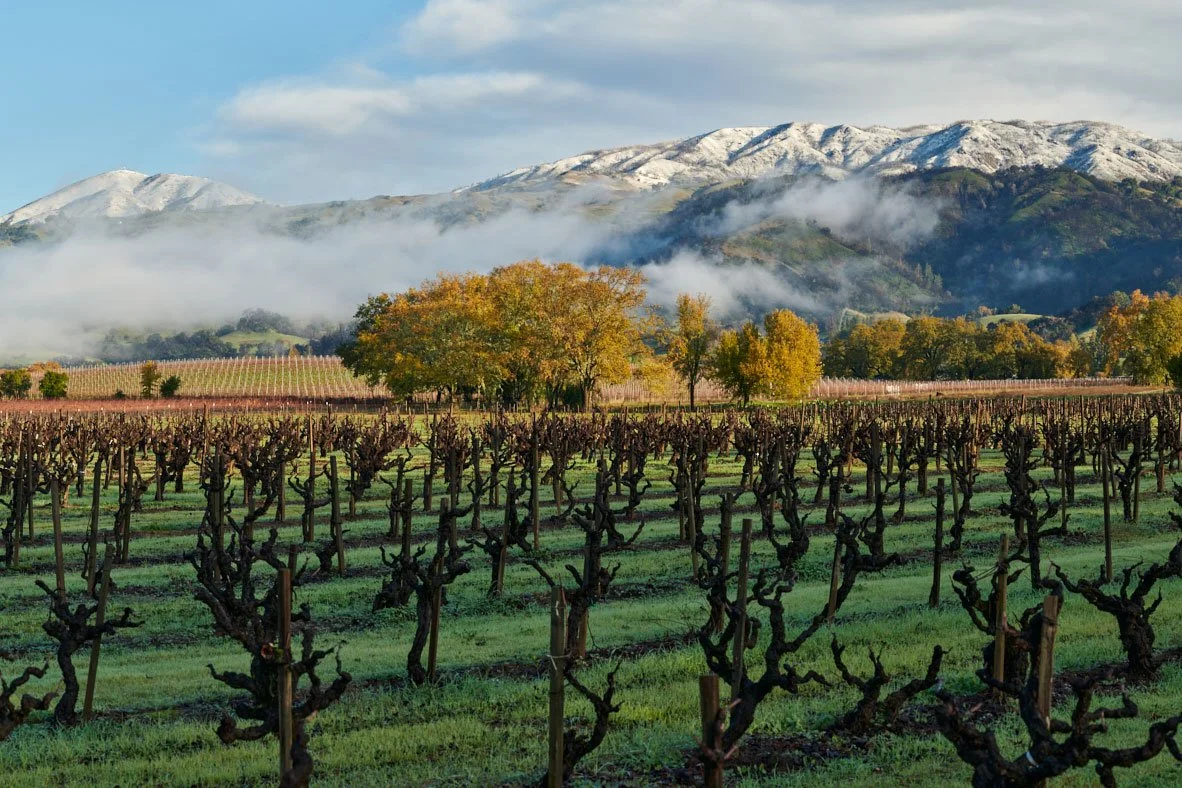
Vines in the Alexander Valley at the foot of Black Mountain
The Alexander Valley AVA covers 76,000 total acres at the top of Sonoma County with about 15,000 acres under vine.. There are a variety of microclimates supporting a substantial range of grape varieties. While Cabernet Sauvignon reigns supreme on the gravelly terrain of the valley floor, the AVA also produces notable Chardonnay, Zinfandel, Merlot, and Sauvignon Blanc. Even some cooler-climate varieties, like Gewürztraminer and Riesling, have found a niche here in the shadow of Mendocino. Just enough coastal fog finds its way up the Russian River Valley to create cool evening and morning conditions. This, however, gives way to hot mid-day temperatures in what is overall a relatively warm growing area.
Oat Valley Vineyard: Planted sometime around 1890 and has been farmed by generations of Domenichllis in coordination with the Cooley family. Gnarly old vines are sustainable dry farmed and produce fruit of distinction and character. Carol receives just 3 acres of their stunning old vine Carignane to make her single vineyard designate “Wireless” Carignane.
Wallstrom Vineyard: Owned by Rod Wallstrom, Ag teacher at Healdsburg High, this vineyard sited on warm, well drained soils produces a bright and jammy Zin. Carol bottles her version under the name “Wally Zin.”
Russian River Valley (Sonoma County)
A large appellation of some 96,000 acres established as an AVA in 1983. Vines were first planted in the later 1800’s by such luminaries as Jacob Gundlach and Count Agoston Haraszthy, the “father of California winemaking.” The deep riverine soils and relatively cool climate produce ripe, succulent fruit and make this a hugely important wine district.
Collins-Limerick Lane Vineyard: A beautiful set of vineyard plots planted largely to Zinfandel and Rhone varietals such as Syrah and Mourvedre, making deep, succulent wines of great character. First planted in the late 19th century by Irish settlers (hence the name), the site as purchased in the 1970’s by the Collins family who put it “on the map” as a source for superb Zin. Their tragic history makes the wines all the more poignant reminders of the nearly 2 centuries of toil to bring this vineyard to its current apogee of quality.
Cucamonga
This AVA straddling the border of Riverside and San Bernardino Counties dates back to 1838 with plantings by Tiburcio Tapia on the Rancho Cucamonga, a Mexican land grant in Alta California. The modern AVA was established by ATF in 1985. The climate is warm and sunny, often exceeding 100 °F, baking the grapes growning in the dry, sandy desert soils. While the region is famed for producing some of California’s finest fruit, it’s also under major threat of developoment, and many historic wineries have already been built over- leaving nothing but place names such as Thomas Winery Plaza and Virginia Dare Winery Business Centre.
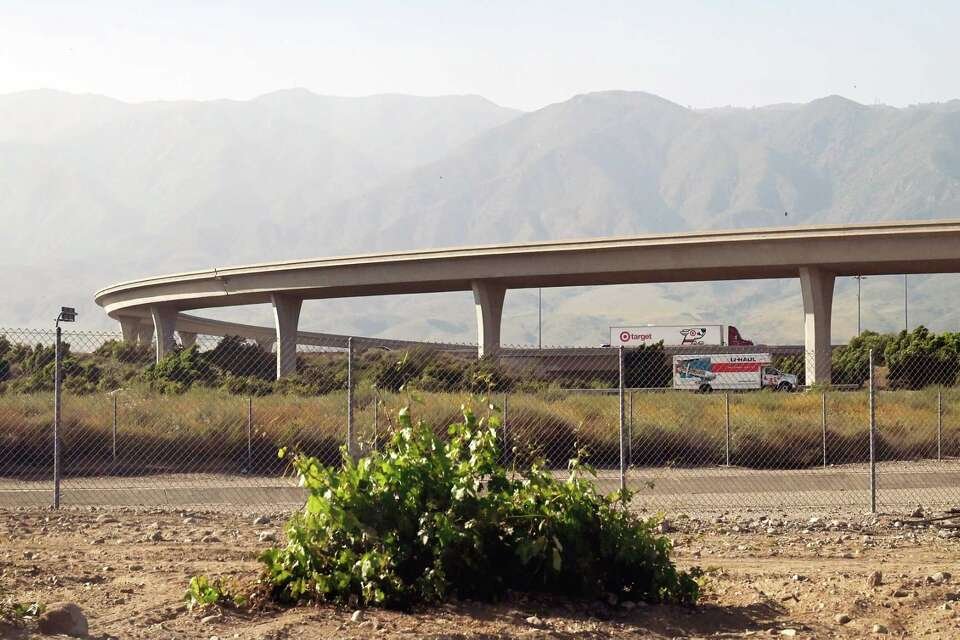
A single untrained vine at Lopez.
Lopez Vineyard: Located 70 miles inland from Los Angeles and right on the edge of the Mojave Desert, Jose Lopez Vineyard was planted in 1918 for “packing grapes” to ship to home winemakers in Chicago and the East. These old Zinfandel vines struggle in the near desert-like conditions; with rocky-sandy soil that holds very little water. After nine decades, they have only grown to about 18 inches tall, and have just a few tiny fist-sized clusters on each vine. So far, the vineyard remains intact but the plastics manufacturer Intex Properties now owns the land and plans to turn it into a logistics hub. The company has promised however to keep some of the land under vine- perhaps the section under high-voltage lines that can’t be developed anyway. This ancient vineyard is the source for Carol’s incomparable Monga Zin.
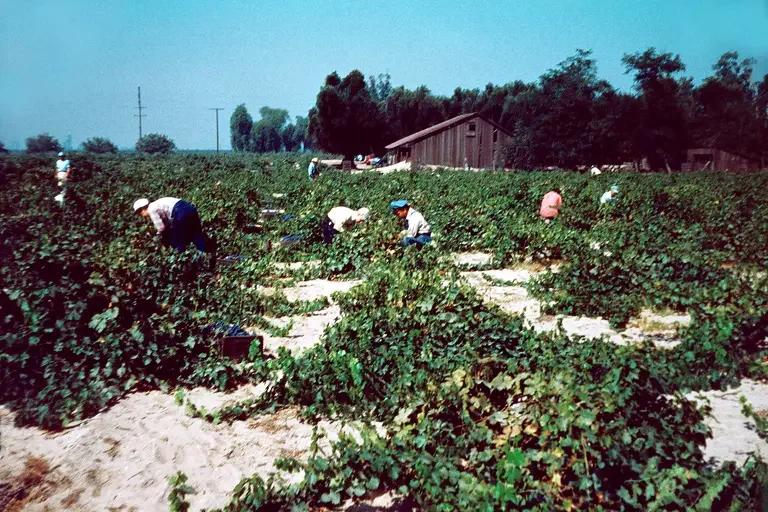
Harvest at Lopez Vineyard
This forgotten corner of the San Joaquin Delta, tucked in between the river and tract housing, is rapidly being developed for housing and suburban sprawl, but has been famed for a century for producing clean, bright fruit mostly from Zin and Rhone varietals. One of the earliest to grow grapes here was Valeriano Cline, around the turn of the last century. His grandsons later moved to establish the Cline Cellars winery in Sonoma, but the label still makes several wines from Oakley fruit in honor of their deep roots there.
“Did you know... Valeriano Cline invented a bathtub with air jets inside, which he named for his wife, Jacuzzi...”
Oakley’s unique soils are 50 to 100 ft deep sandy river deposits, nutrient-poor but extremely well drained. This forces the vines to delve deep for water and nutrients, picking up bright minerality as they force their way through the deep sands. The sandy soil is also inimical to phylloxera, so the zone boasts century-old, ungrafted vines of Zin, Mourvedre, Carignane and other Rhone varieties.
Plancbon Vineyard: Planted in 1902, a mere 6.5 acres remain of this historic vineyard. Deep sandy alluvium planted to Zin with companion vines of Alicante and Merlot. This is the source for Carol’s Barbera d’Oakley.
Big Vineyard: A selection of ancient-vine parcels along Vineyard Road. Not large vineyards, but “big” in significance and quality. Planted around 1890’s in deep sand, on own roots. This is the primary source for Carol’s Rhone-style Coquille Rouge blend. From Carol: “All of my Mourvedre and Carignane come from there plus most of the Alicante in the blend—all those are co-fermented, and if Grenache Noir and Petite Sirah arrive around same time, they join the blend as well. Grenache is old, not sure of date but head trained and there are some Carig[nane] and Mourvedre here too, and Petite Sirah is in Pato Vineyard, next to the older block there, on wire. Label says “Central Coast” because that AVA extends from Santa Barbara all the way to this area, Contra Costa County, on shores of SF Bay at mouth of Sacramento River.”
Paso Robles
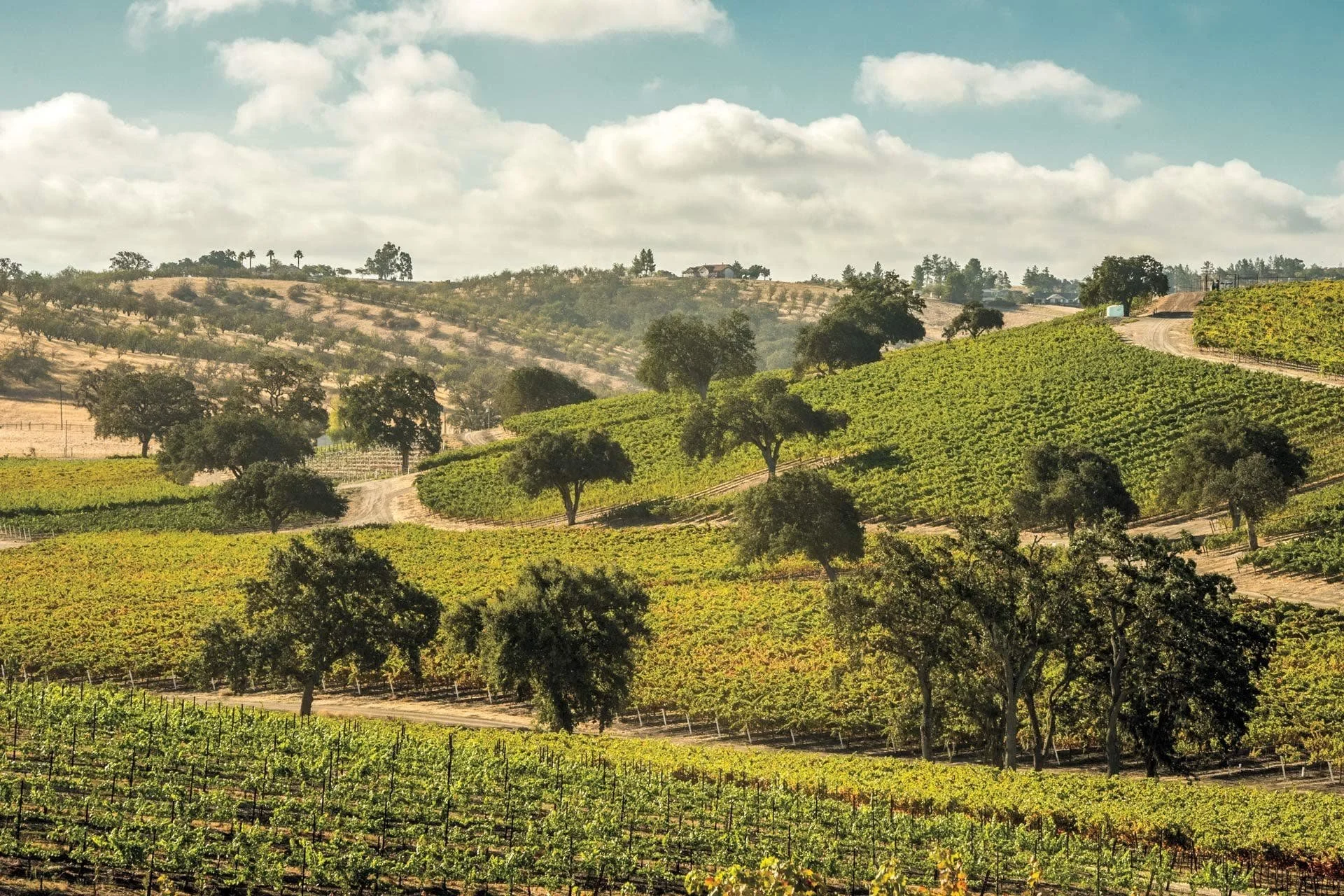
The Pass of the Oaks was part of the route between the Spanish missions of San Luis Obispo and San Miguel, along today’s California Central Coast. Established as an AVA in 1983, it’s known for its heritage Zin plantings, but is also recognized for a wide variety of other warm-climate plantings. especially Rhone varieties. Today the appellation has 40,000 acres under vine, with over 60 varieties in use.
Nevarez Vineyard: Juan Navarez’ home vineyard, sited on the eastern flank of the Salinas River at 120 ft elevation on on sandy loam soils. The vineyard is in parts over 100 years old, but was budded over tin 1992 o white Rhone varieties including Grenache Blanc, Marsanne, Roussanne and Viognier. Carol’s Coquille Blanc is sourced from this site.
Rockpile (Sonoma County)
“One of the finest Zinfandel sites in Northern California...”
The Rockpile is at the head of the Dry Creek Valley, above the dam that created Lake Sonoma. Elevatyions range from 1000 to over 2000 ft elevation, and the warm days and quite cool nights lead to long hang times creating repeness with power and good acidity. Soils on the Rockpile are marginal at best, mostly of reddish, highly-oxidized shallow loam on clay subsoils.
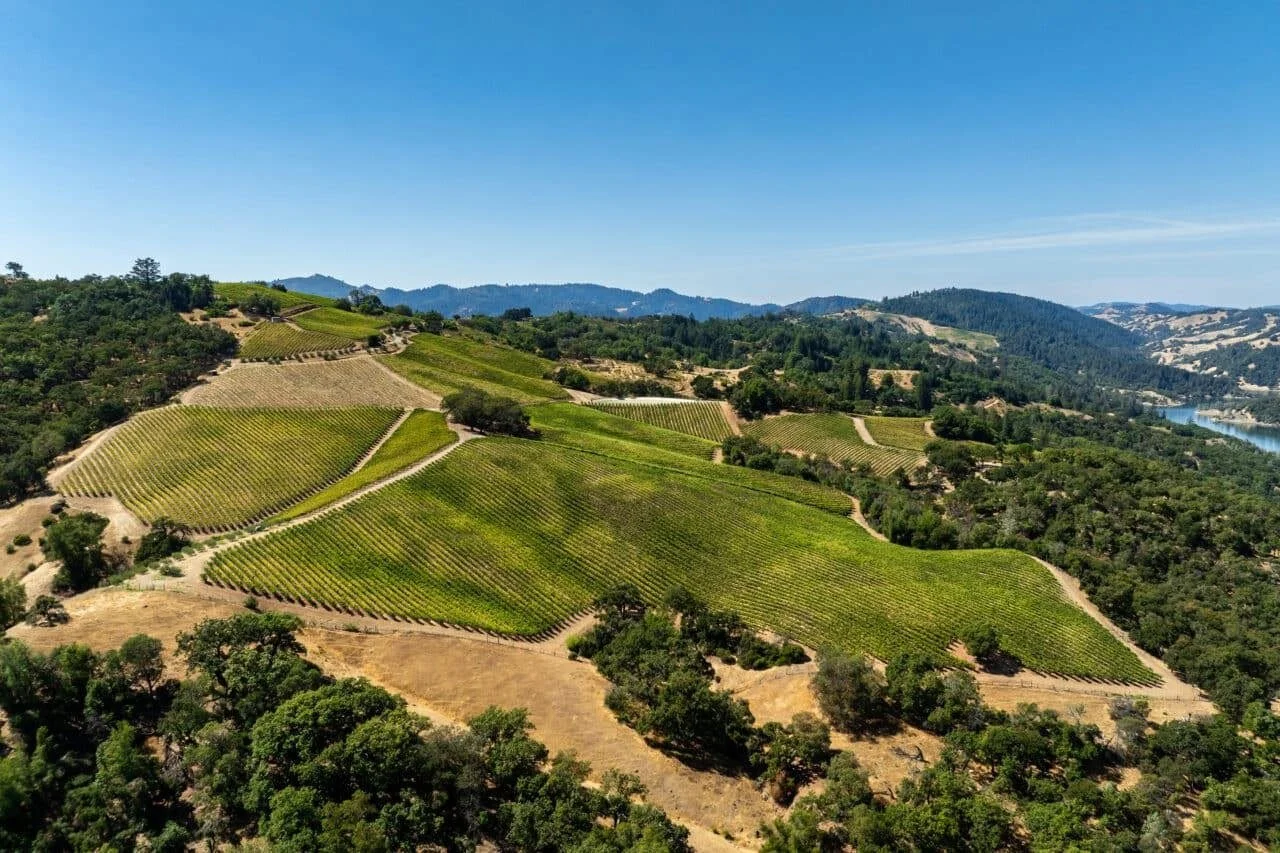
Vines up on the Rockpile
Carol makes wine from 3 vineyards in the Rockpile AVA:
Florence Vineyard (Dry Creek AVA)
This vineyard, planted in 2003 by Jack Jr. for Jack Sr., is managed by both Jacks. The vineyard lies on sandy soils at about 300 ft and is planted to Petite Sirah. Lying within the overlap zone of the Dry Creek and Rockpile AVA’s, the soils are lighter and produce a bright, jammy style of Petite Sirah. This is the source for Carol’s Florence Reserve (Florence Vineyard, Dry Creek) Petite Sirah.
(Jack Florence Jr. Vineyard aka Rockpile Rd Vineyard AKA Florence Vineyard: Rockpile)
This vineyard is at about 1300 ft elevation, and planted by Jack Flornece Jr. in 1997 to Zinfandel and Petite Sirah. This is the source for Carol’s Rockpile Reserve (Rockpile) Petite Sirah and Rockpile Reserve (Rockpile) Zinfandel
Way on up Rockpile Rd at 2000 ft elevation, this vineyard was planted by Rod and Cathy Park back in 1992 to Petite Sirah and Cabernet Sauvignon. This is the source for Carol’s Rockpile Reserve (Rockpile) Cabernet Sauvignon.