
USA > Washington > Yakima Valley > Grossmeister Cabernet Sauvignon
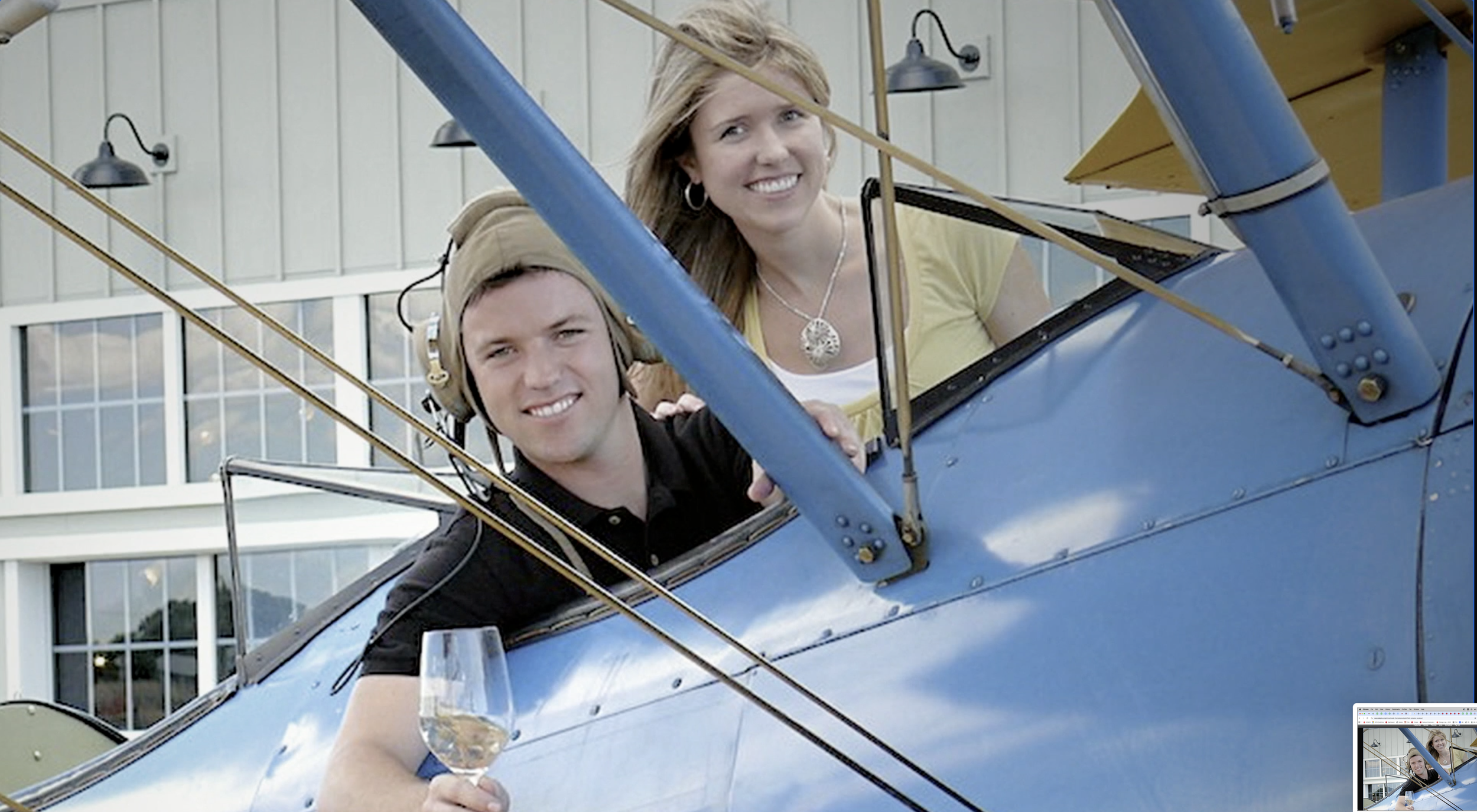
Marcus & Lori
The Yakima Valley
The Yakima Valley is considered the cradle of the Washington wine industry, home to the state's first plantings and its oldest federally recognized wine region. Winemaking in the valley began with small-scale 19th-century plantings, evolved into the first commercial vineyards in the early 1900s, and achieved official status as Washington’s first American Viticultural Area (AVA) in 1983.

Glacial Lake Missoula, the Columbia Floods, & Yakima
The soils in Yakima are the result of the enormous, biblical-scale floods that occurred as Glacial Lake Missoula breached its ice dams over and over some 15,000 to 13,000 years ago, draining the lake, scouring out the channelled scablands of the Columbia Plateau, and depositing river-channel deposits (fastwater, gravel and cobble soils) and slackwater silt and clay soils hundreds of feet deep in places. The Yakima Valley, running from the town of Yakima east-southeast towards Red Mountain, is a sort of “flood zone backwater” that was filled with deep clay-silt soils. Located just east of the Cascade Range, itself just east of the Olympic Range, the air is wrung clear of moisture by their double-squeegee effect, giving Yakima deep soils, and a sunny dry climate.
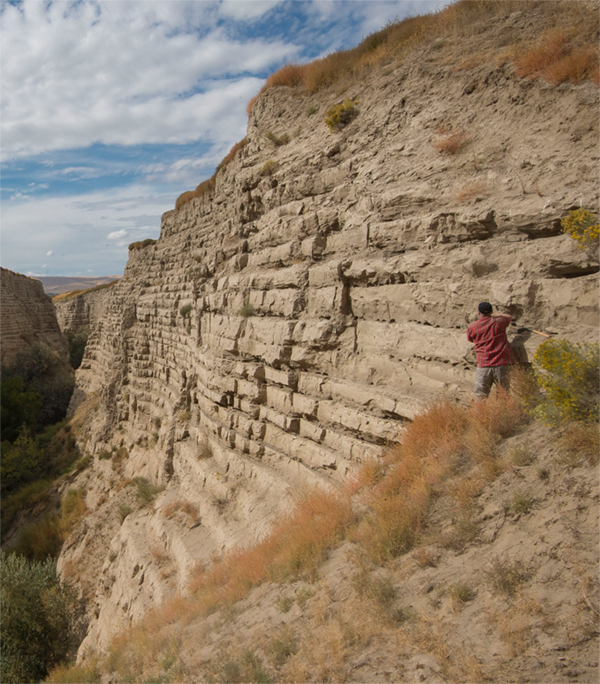
Slackwater soils deposited by repeated flood events
The AVA’s nearly 19,000 planted acres include more than one-third of the state’s vineyards. It has more diversity in the orientation and pitch of slope than nearby Horse Heaven Hills; and also being further north, some of its zones are cooler. Consequently, there’s a more even balance of white to red varieties. In fact, more than 50% of the state’s Chardonnay and Riesling come from Yakima Valley, but the region is also known for its Cab, Pinot, Syrah and other red varieties.
The first vines were planted in 1869 by French winemaker Charles Schanno. The area became fully viable with the 1903 completion of the Sunnyside Canal with brought the first irrigation water to the valley, and the first commercial grape plantings were established in 1917. Today, Yakima hosts over 90 wineries in its 19,000 acres, producing much of Washington’s finest wines.
Airport Ranch and Airfield Estates
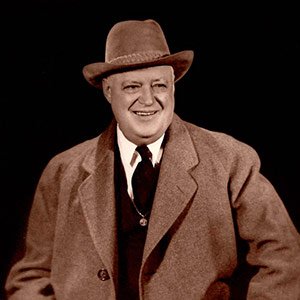
Howard Lloyd Miller was born in 1884 in Lanark, Illinois, and moved west in 1907, eventually settling in Sunnyside, Washington. Recognizing the Yakima Valley’s agricultural promise, he began acquiring farmland—often without irrigation—with the belief that water would one day transform the region.
H. Lloyd became a central figure in the effort to bring irrigation to the higher elevations of the valley. The Roza Canal was finally funded in 1935 and completed in the following decades, transforming thousands of acres of farmland—including the property that would become Airport Ranch.
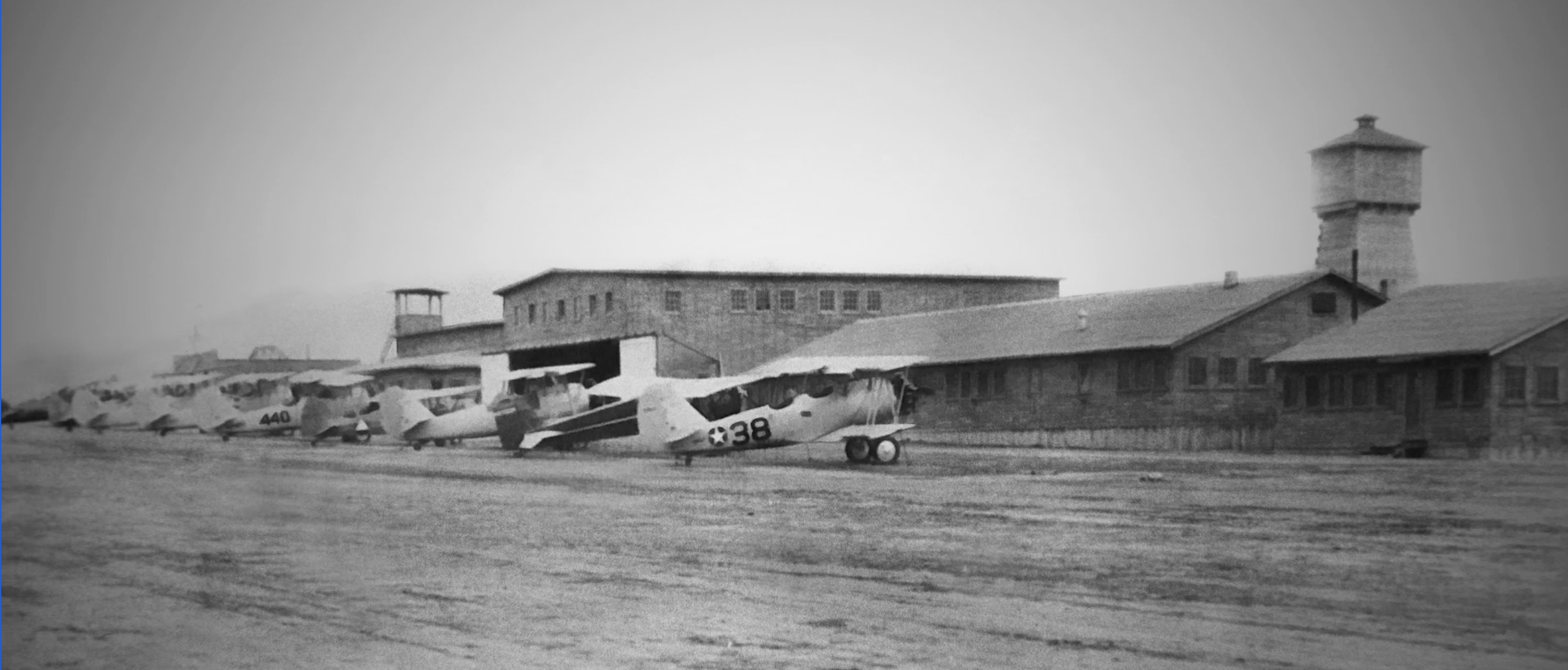
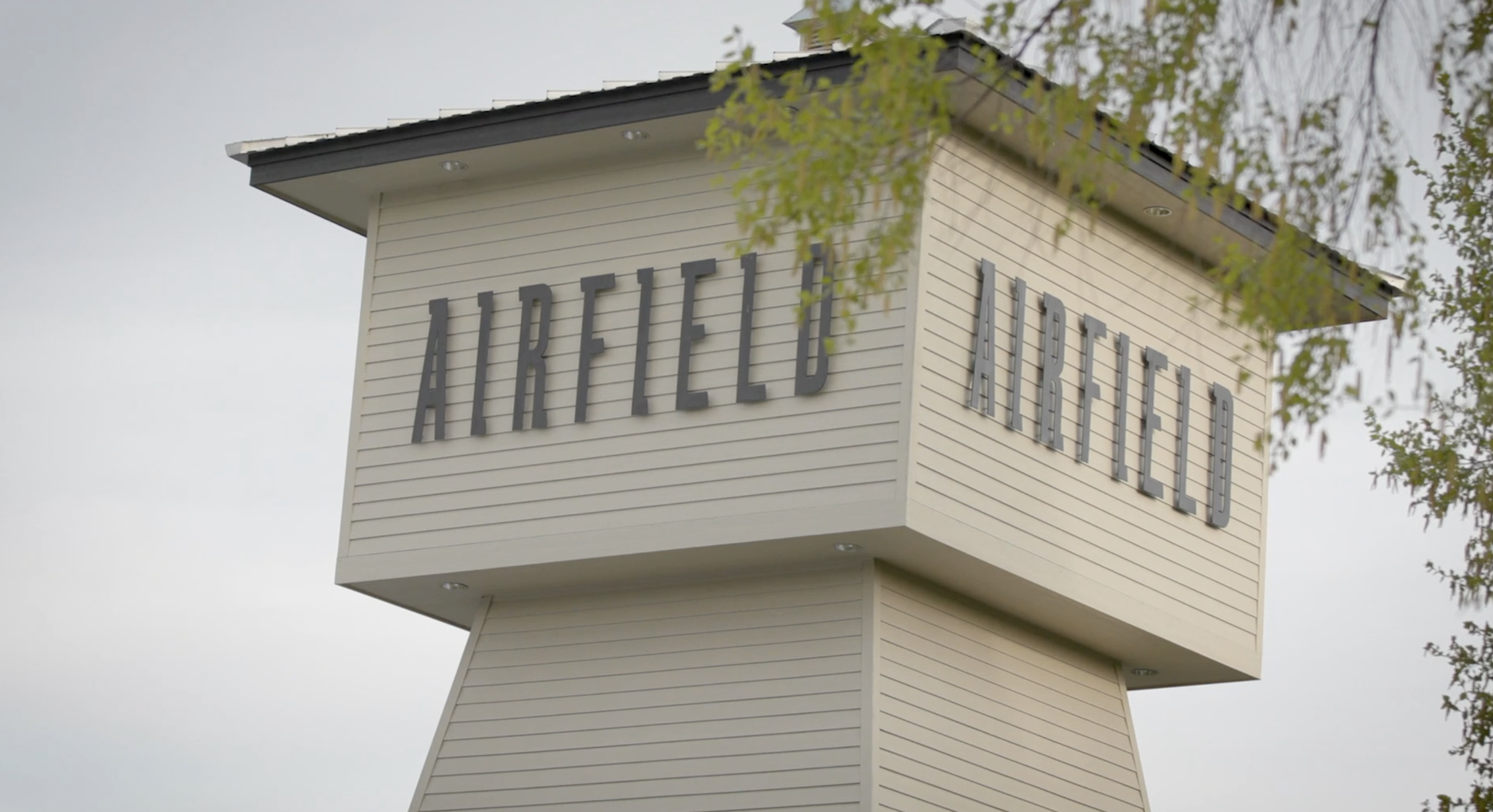
During World War II, Miller leased a portion of his land for the construction of a pilot training center, where Army Air Corps reservists trained in open-cockpit biplanes. After the airbase closed in 1944, Miller purchased the buildings at auction and converted the site into the headquarters of the family farm, which became known as Airport Ranch.
H. Lloyd’s son Don was raised on the family ranch and served overseas during World War II before returning home to farm alongside his father. Throughout the 1950s and 1960s, Don helped expand a highly diversified agricultural operation that included asparagus, alfalfa, potatoes, onions, oats, cattle, hogs, mint, and sugar beets. In 1967, he began planting grapes, laying the foundation of what would become our estate vineyard.
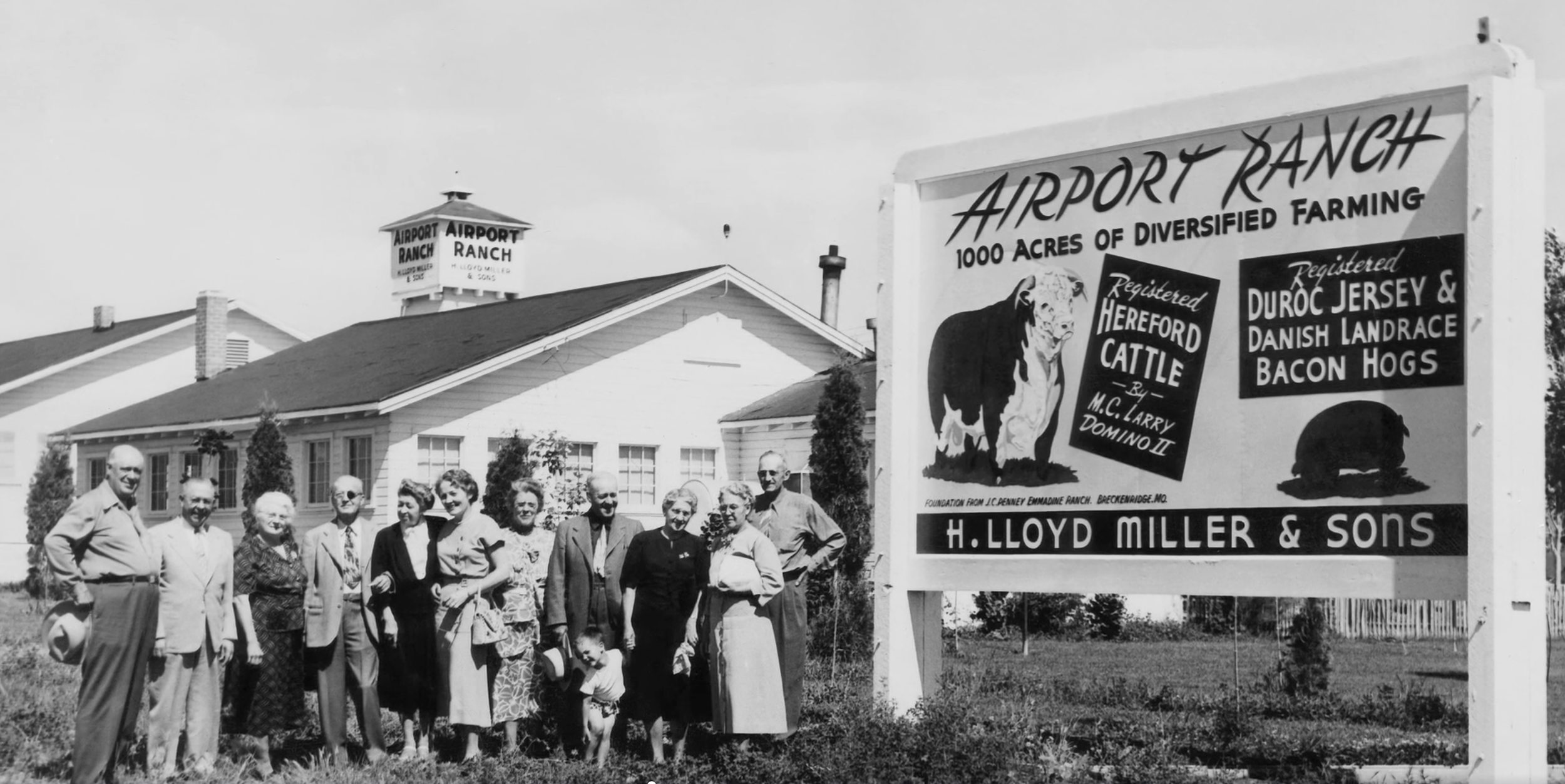
Don’s son Mike grew up working the ranch and became the third generation to carry on the family’s agricultural legacy. After serving in the United States Navy during the Vietnam War, Mike returned home determined to build the future of the farm.
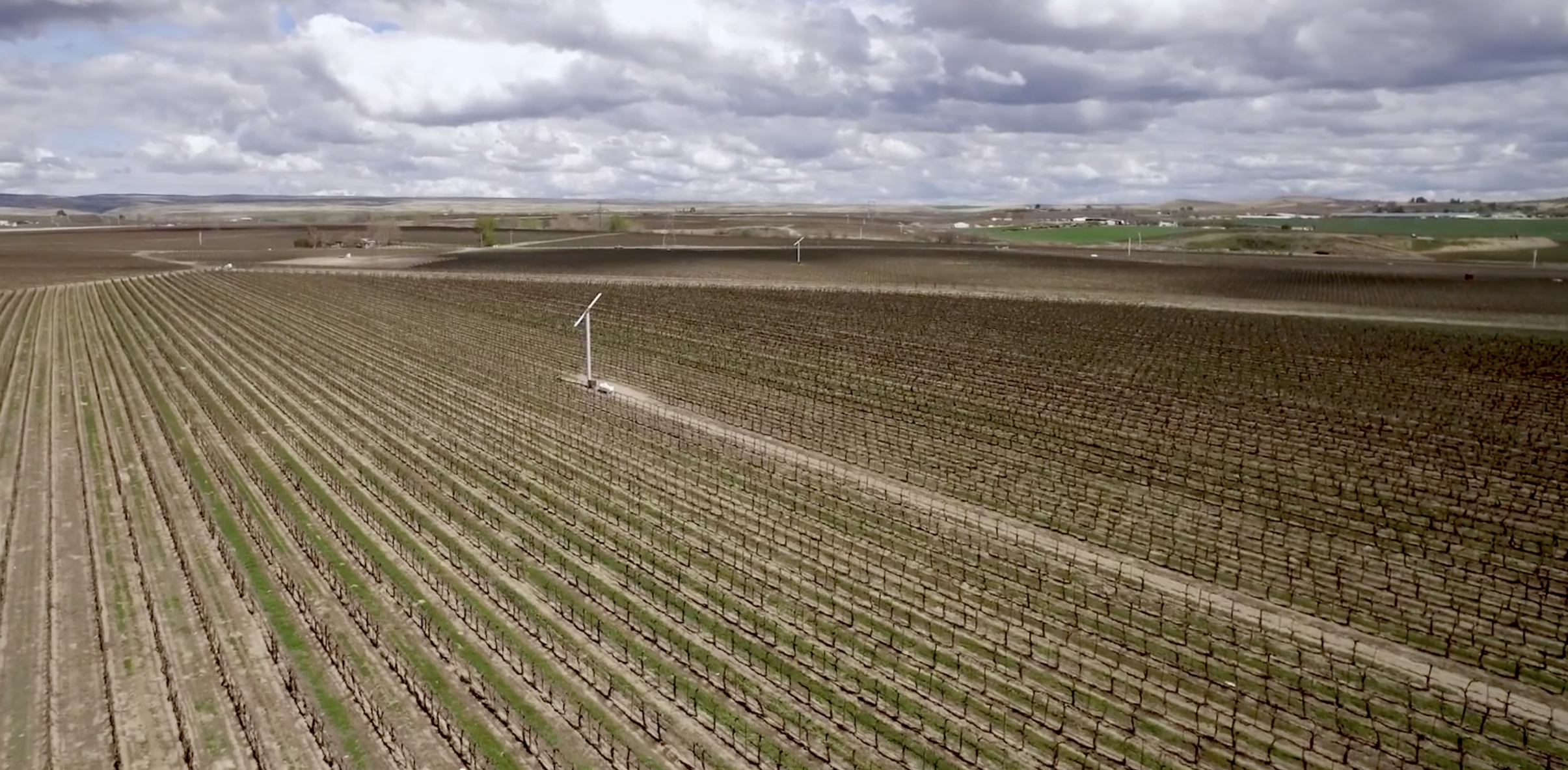
In the late 1970s, the family began expanding wine grape plantings and refining viticulture practices and over time, the vineyard expanded to what it is today- over 800 acres of wine grapes and 350 acres of juice grapes.
In 2005, Mike founded Airfield Estates Winery, bringing the family’s estate-grown fruit into the bottle under its own label; and today the Estate and Winery are managed by his children Marcus and Lori, who continue the family’s commitment to farming, winemaking, and hospitality, carrying forward a legacy that began more than a century ago.
The Wine
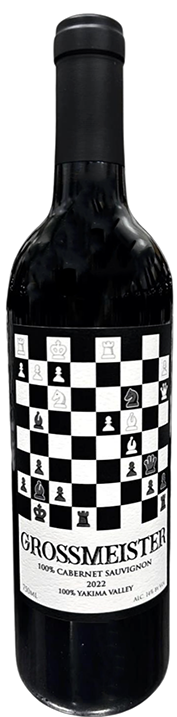
As the family expanded their winery operations, they developed a strong private-label business using all estate fruit, as a bridge between their wine-grape growing business (Airport Ranch) and their own-label wine production business (Airfield Estate Winery). Our Grossmeister Cabernet Sauvignon is all estate fruit, grown sustainably on Marcus and Lori’s vineyards. The name is an homage to Chess Grandmaster Bpbby Fischer (then a 13-year-old boy) who played Black during the Game of the Century in 1956.
the game of the century
In this game, Bobby Fischer (at 13 years of age, playing Black) shows his innovation and improvisation. Donald Byrne (a 26-year old American Chess Master playing White), after a standard opening, makes a seemingly minor mistake on move 11, losing a tempo by moving the same piece twice. Fischer pounces with brilliant sacrificial play, culminating in a queen sacrifice on move 17. Byrne captures the queen, but Fischer gets copious material for it – a rook, two bishops, and a pawn. At the end, Fischer's pieces coordinate to force checkmate, while Byrne's queen sits useless on the other side of the board.
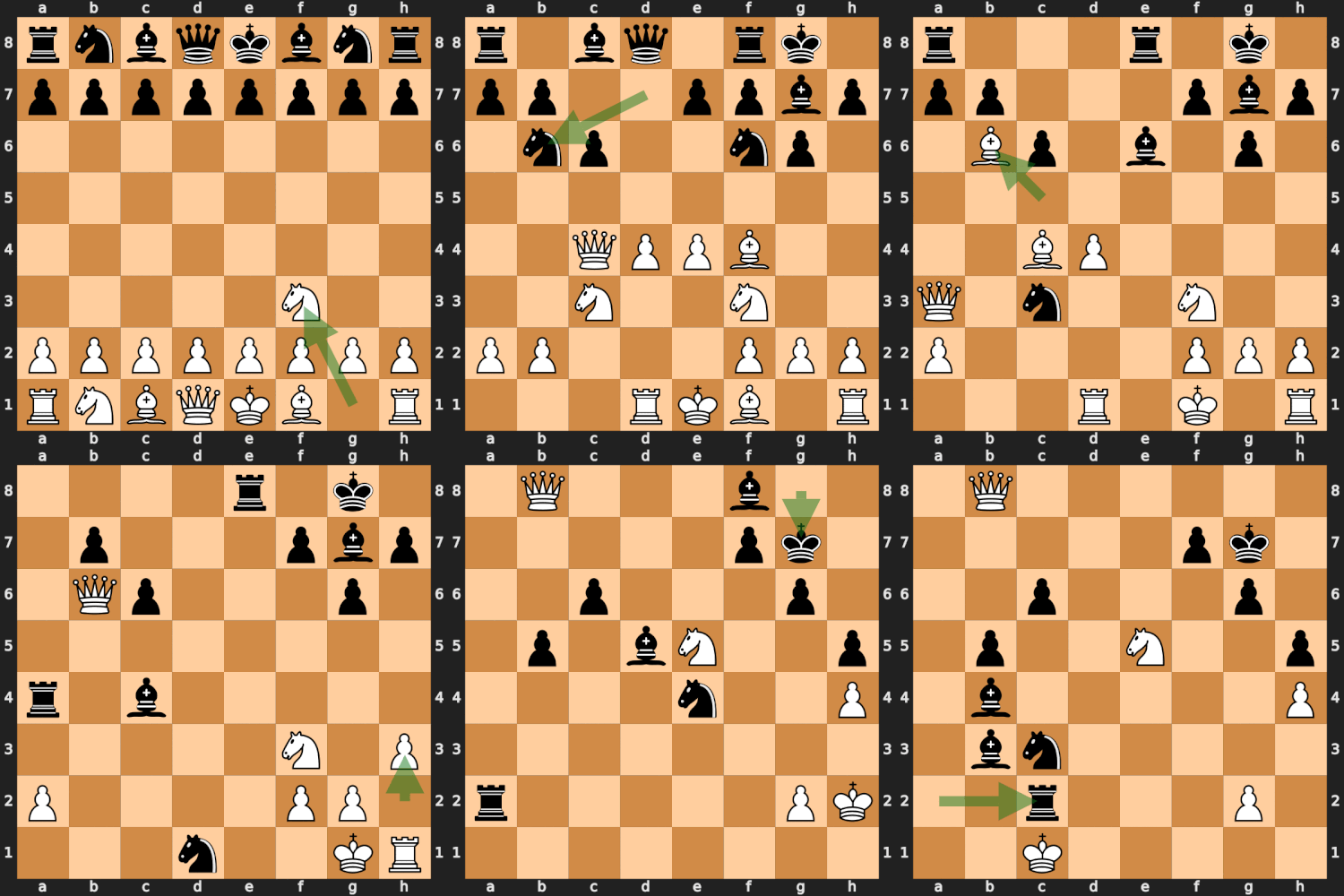
Bobby’s moves in The Game of the Century