Germany > Rheingau > Kloster Eberbach
sustainable, organic practices

The Rheingau
Located along a stretch of the Rhine where it flows nearly due west for about 18 miles from Wiesbaden, the Rheingau’s south-facing vineyards produce some of the Rhine’s most compelling wines.

Schloss Johannisburg (whence “Johannisburg Riesling”) is one of the many superb estates perched above the river on this stretch which hosts such legendary wine towns as Eltville, Rauenthal, Winkel and Rudesheim. 2187 acres, 78% Riesling, 12% Spatburgunder, and a smattering of other varietals.
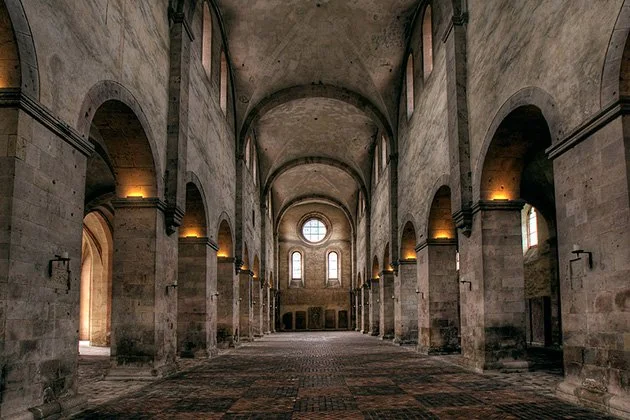
Kloster Eberbach, as filmed for the movie The Name of the Rose starring Sean Connery and Christian Slater (1986)
kloster eberbach
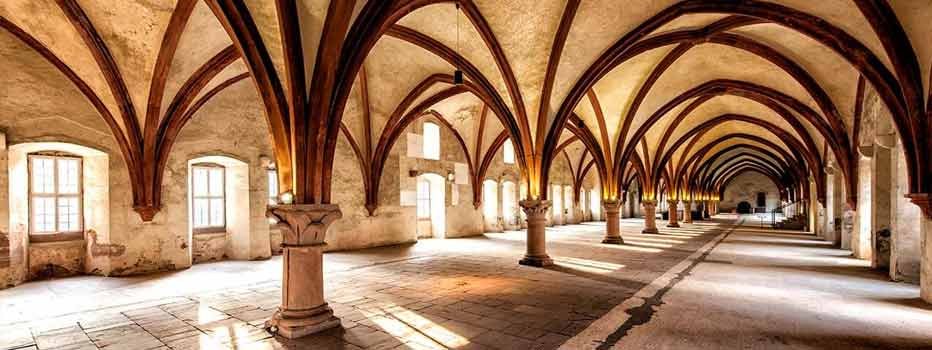
Originally founded in 1116 as an Augustinian abbey, the property was converted to a Benedictine abbey in 1131 and then refounded as Eberbach Abbey, a Cistercian monastery, in 1136. An active building and expansion program continued throughout the middle ages, including the late 1400’s conversion of some of the Brothers’ quarters and the lay refectory into wine cellars. Construction and destruction alternated over the centuries, with the Thirty-Years War (1618-1648) resulting in the plunder of the monastery by Swedish and Hessian troops, and the theft of the 512,000 bottles of wine the monks had stored up to finance the building of a new monastery.
After a slow rebuild, the Abbey hit new peaks of Baroque architecture and design through the 18th century, reaching a peak just before the secularization of most Church properties during the Napoleonic Era.
The estate has since then been part of the domain of the House of Nassau, then (1866) the Prussian State, then (1946) the Federal Republic of Germany’s State of Hesse, and (since 1988) a nonprofit foundation dedicated to the restoration of the Abbey and the development of its extensive wine production.
The VDP
Kloster Eberbach is a member of the Verband Deutscher Prädikatsweingüter (VDP), an association of some 200 top-level German wine producers dedicated to expression of unique terroirs and maintaining quality well above the national standards. Founded in 1910, they use a four-tier classification system focusing on vineyard location (Gutswein, Ortswein, Erste Lage, Grosse Lage) to highlight Germany's finest dry and, sometimes, traditional sweet wines.
The staatsdomaine
Located in Eltville, Eberbach controls 4 separate wine estates- the incomparable Steinberg, located about 1/4 mile from the monastery itself; the famed Hollenberg in Assmannshausen, which has specialized in Pinot Noir for over 500 years, their property in Rauenthal, the highest-alitiude village in the Rheingau, and finally their Domane Bergstrasse, the only VDP estate in the Hessische Bergstrasse.
The vineyards are mostly planted to Riesling, but Chardonnay, Pinot Blanc, Pinot Gris, Pinot Noir (Weiss, Grau and Spätburgunder, respectively) and Dornfelder are also produced. The Steinberg vineyard, planted by the monks over 700 years ago , still produces some of the best wines on the estate today.
sustainability and eco-sensitivity
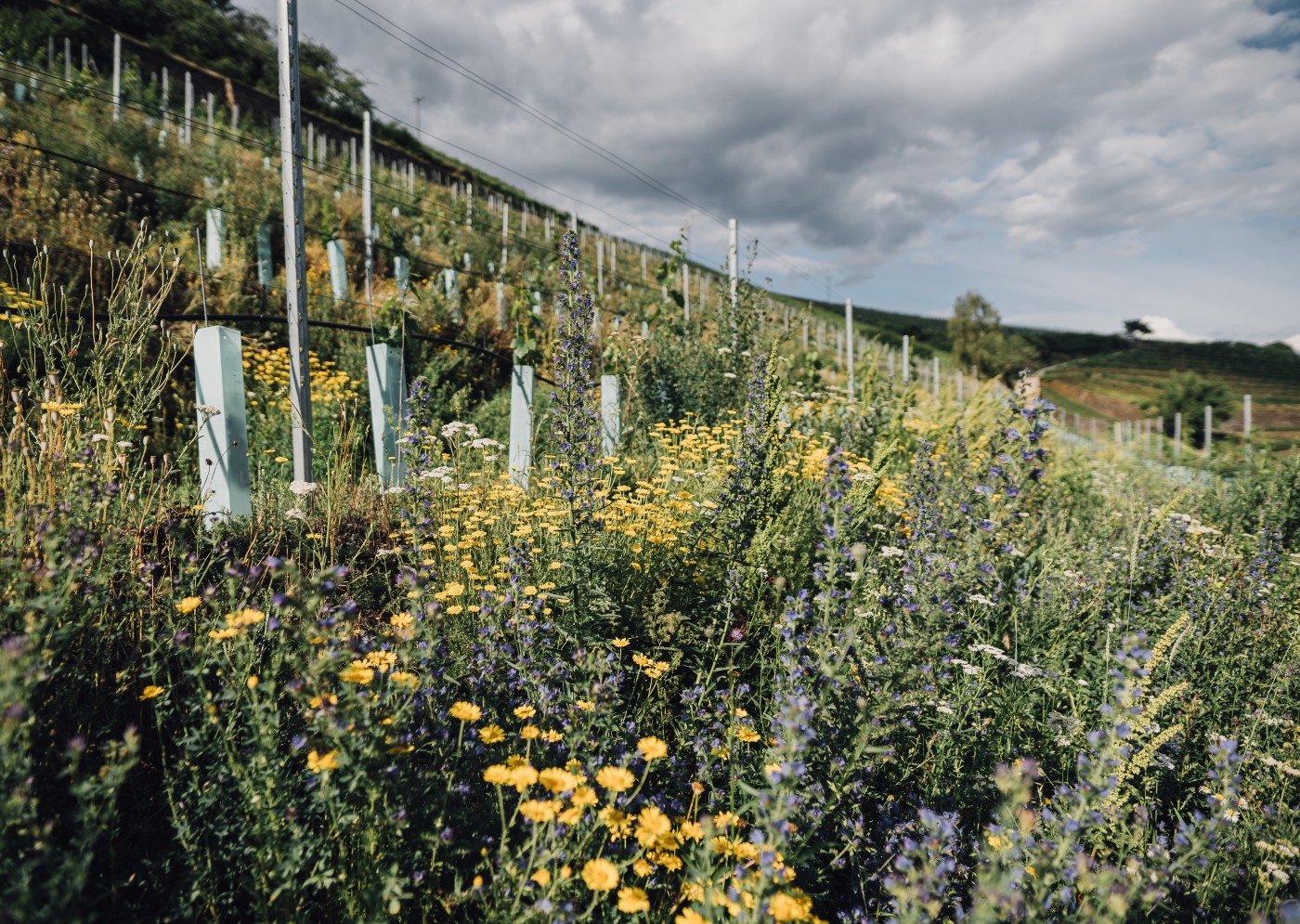
The estate is managed sustainably, with minimal use of chemicals, green cover and integrated pest management practices. Insect hotels and raptor perches have been added throughout the domains, and over 13km of stone walls provide snake and lizard habitat.
The wines
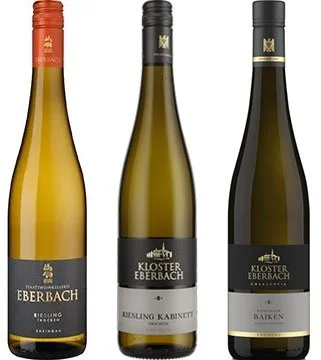
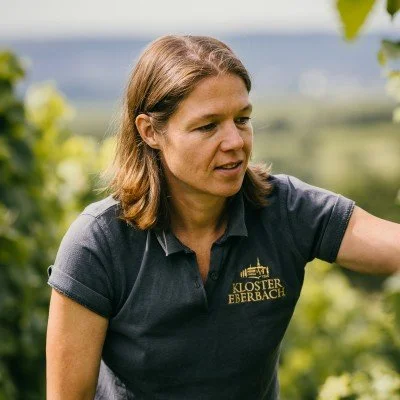
Kloster Eberbach makes literally dozens of wines from its various State properties. We presently focus on three Rieslings at three levels, showcasing head winemaker Katherin Puff’s expertise in working with the estate’s ancient vineyards.
Staatsweinkellerei Eberbach Riesling Trocken: a classic dry Riesling sourced from various of the state vineyards, with gently floral aromas, notes of aromatic spice, stone fruit and savory herbs. Ripe pear and peach skin characters on the palate with bright, well-integrated, limey acidity.
Kloster Eberbach Riesling Kabinett: a perfectly balanced off-dry Riesling from the Eberbach estate in Eltville, with apple and pear notes, peach and white plum, long and succulent on the finish with the sweetness balanced out by brilliant acidity.
Rauenthaler Baiken Riesling Trocken: a superb example of powerful and architectural Riesling from the great Baiken vineyard, an Erste Lage on a steep, south-facing slope with about 60% gradient. Eberbach owns about 90% of this iconic vineyard.