
France > Rhone > Southern Rhone > Famille Jaume
Organic Practices, HVE
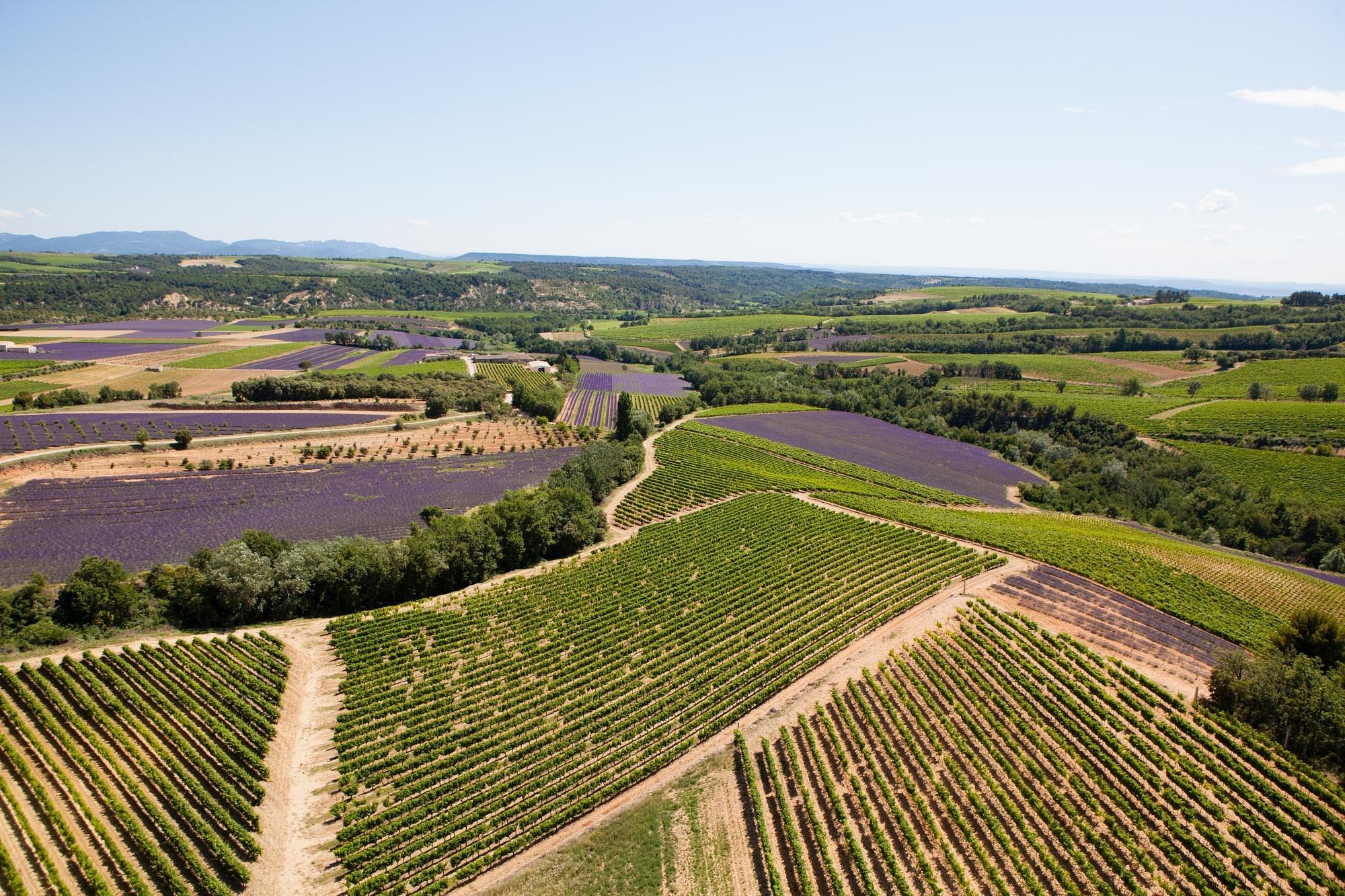
vinsobres
Vinsobres is located in the Departement of the Drome, which is named for the Drome River that cuts through the area. The village is on the very southern edge adjacent to the Vauclusse, and in fact is bordered to the north by the Vaucluse as well- it’s wedged in between the main territory of the Vaucluse and the Papal Exclave, a bit of Vaucluse floating in the Drome due to a quirk of history.
Elevated from Cotes du Rhone Villages to its own Appellation in 2002, Vinsobres is the northernmost Cru of the southern Rhone valley, and brings a bit of “northern Rhone” sensibility to its wines.
A relative backwater, Vinsobres is not produced by any of the major negociant firms. Its 33 producers are mostly small family growers, along with a couple of small cooperative cellars.
climate & terroir
The Drome spans a transition from Mediterranean to Continental climates, and runs from semiarid to verdant. Vinsobres, at its southern edge, has a fully Mediterranean climate dominated by the Mistral- the north wind blowing down the Rhone valley and cooling the vineyards. Summers are hot and dry, with most rainfall occurring in fall and winter. Winters are mild, with rare freezing temperatures. The hot dry summers provide great ripeness, while cooling breezes preserve acidity.
The average elevation of the vineyards in Vinsobres is around 1000 ft, running from the town’s high plateau down to the Aigues River, a tributary of the Rhone. Soils run from calcareous conglomerate on the plateau through pebbly screes on the slopes down to Pliocene river terraces of sandy gravel and clay. These variations are classified locally into four soil types- Les Collines, Le Plateau, Le Coteau, and the Première Terrasse. As a result, wine styles can be quite variable within a very small area, but are generally well-structured wines with good aging potential.
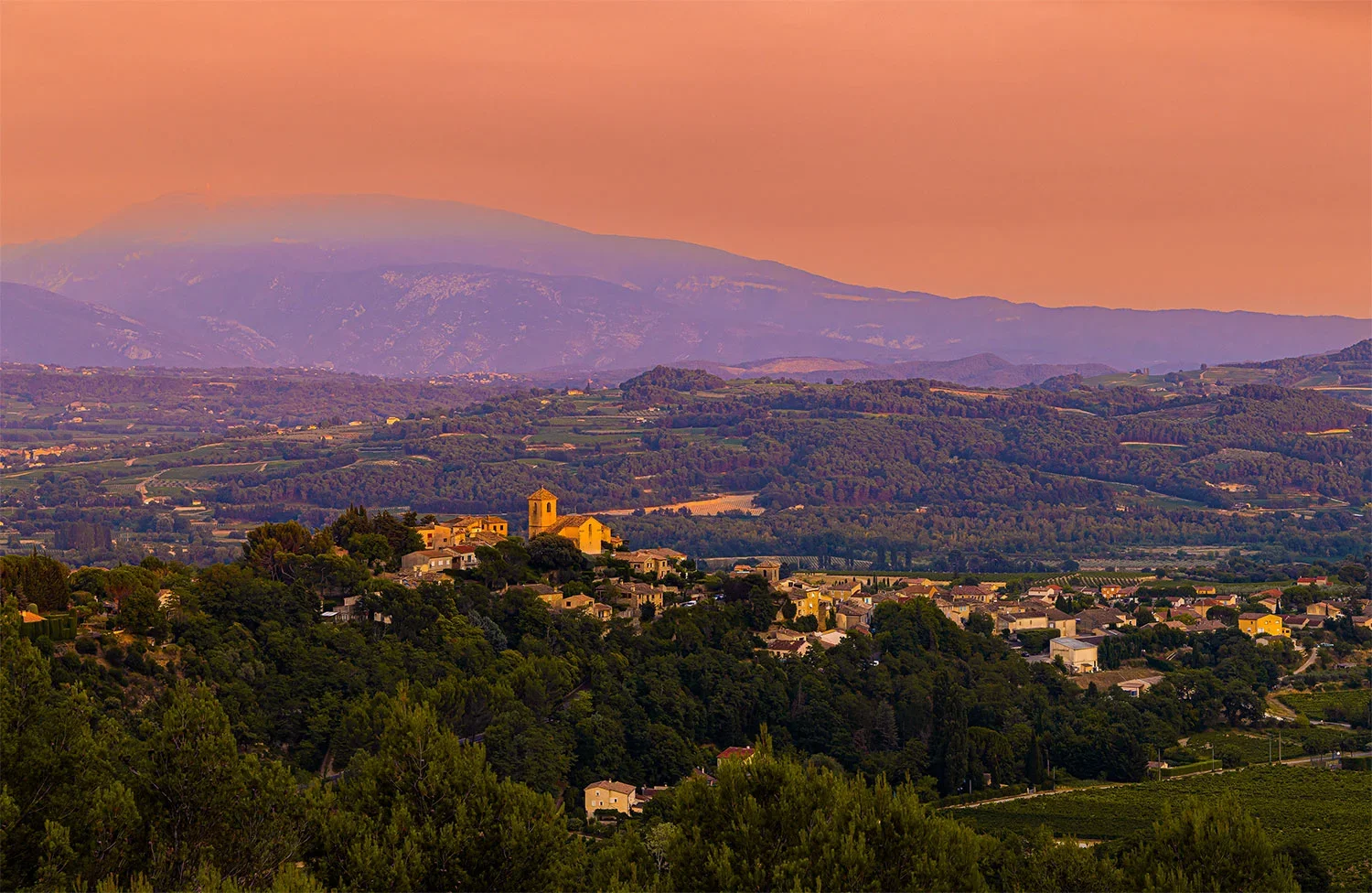
Vinsobres

La Famille jaume
Located in the hamlet of Vinsobres a few miles north of Vaison-la-Romaine, Famllle Jaume was founded in some 120 years ago by Henri Chauvet and Baron Le Roy. Chauvet’s son-in-law Pierre Jaume took over when Henri retired, then Pierre’s son Claude in his turn. Today the domaine is run by Claude’s sons Pascal & Richard. Pascal and his wife Isabel manage the vineyards, while Richard with his wife oversee the winemaking and cellars.
“Pierre Le Roy de Boiseaumarié, also known as Baron Le Roy (1890-1967), was the inspiration behind the new system of wine appellations in France. He was co-founder of INAO, the National Institute for Designations of Origin, and the French Wine Academy. He was also president of the International Office for Vine and Wine.”
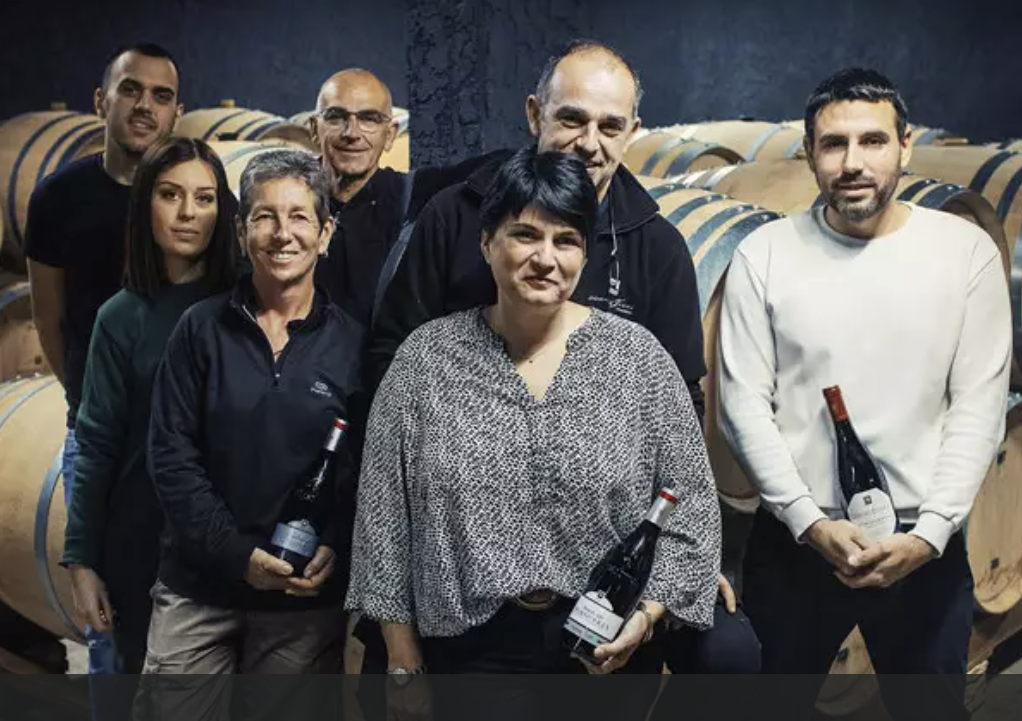
Three generations of the Jaume family- Claude and his wife Nicole at center.
Today the domaine owns some 240 acres of prime land in the Rhone, and holds long-term contracts to additional vineyards from which they produce the Famille Jaume wines.
All vineyards under their management are farmed organically. The family holds High Environmental Value (HVE) certification for their own vines, and works to the same standards on the properties producing the Famille Jaume range. This includes practices such as
Natural grass cover to preserve soil health and microbial life;
Organic mulching to nourish vines and reduce fertilizer use;
Pheromone diffusion for pest control without insecticides;
Preservation of hedges and woodlands as refuges for local fauna.
The wines
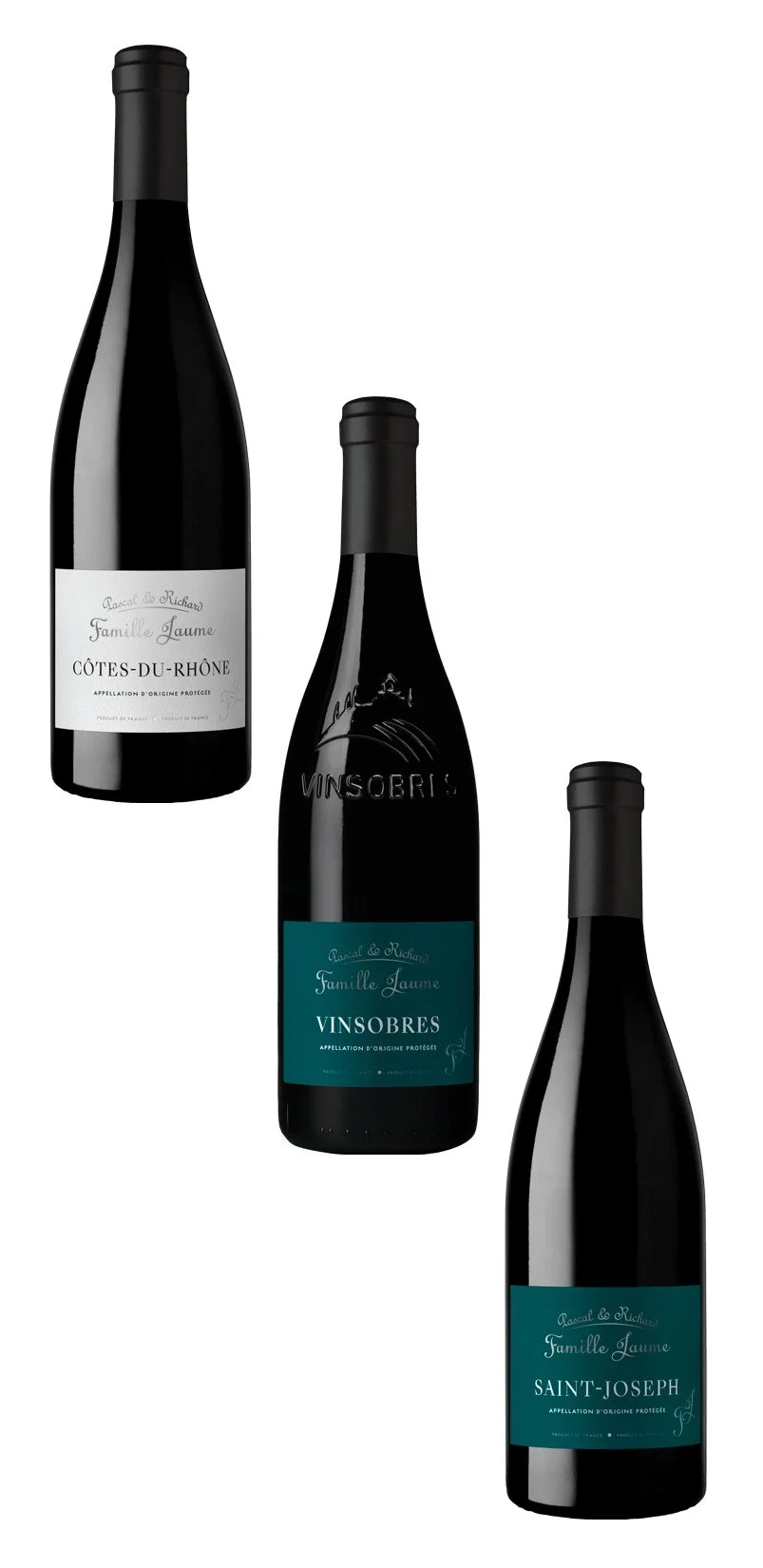
Cotes du Rhone: a blend of Grenache and Syrah crown on calcareous sandy loam soils. Destemmed and vinified in large vats, the wine preserves freshness and primary fruit flavors. Supple and juicy with raspberry and red currant notes.
Vinsobres: Syrah and Grenache from the Les Collines upland terroir, on a mix of sandy silt and clays. Careful triage before destemming and vinification in large vat. Aged in large oak foudres, this wine shows bright black and red fruits, notes of both white and black pepper. A typical Vinsobres, it shows good structure, rounded tannins and great aging peotential.
Gigondas: Grenache and Syrah from two plots at the foot of the Dentelles de Montmirail. Calcareous shaly soils covered with Chateauneuf-style cobbles. Destemmed, vinified in large vat and aged in oak foudre for 12 months before bottling.
Saint Joseph: 100% Syrah from an old-vine plot on a mix of granitic and clay-derived soils. Destemmed before extended maceration, then vinification followed by 10 months in large oak foudres. Deep red and black fruits, spices and smoky baconfat aromas. Superb Syrah from this iconic terroir.