
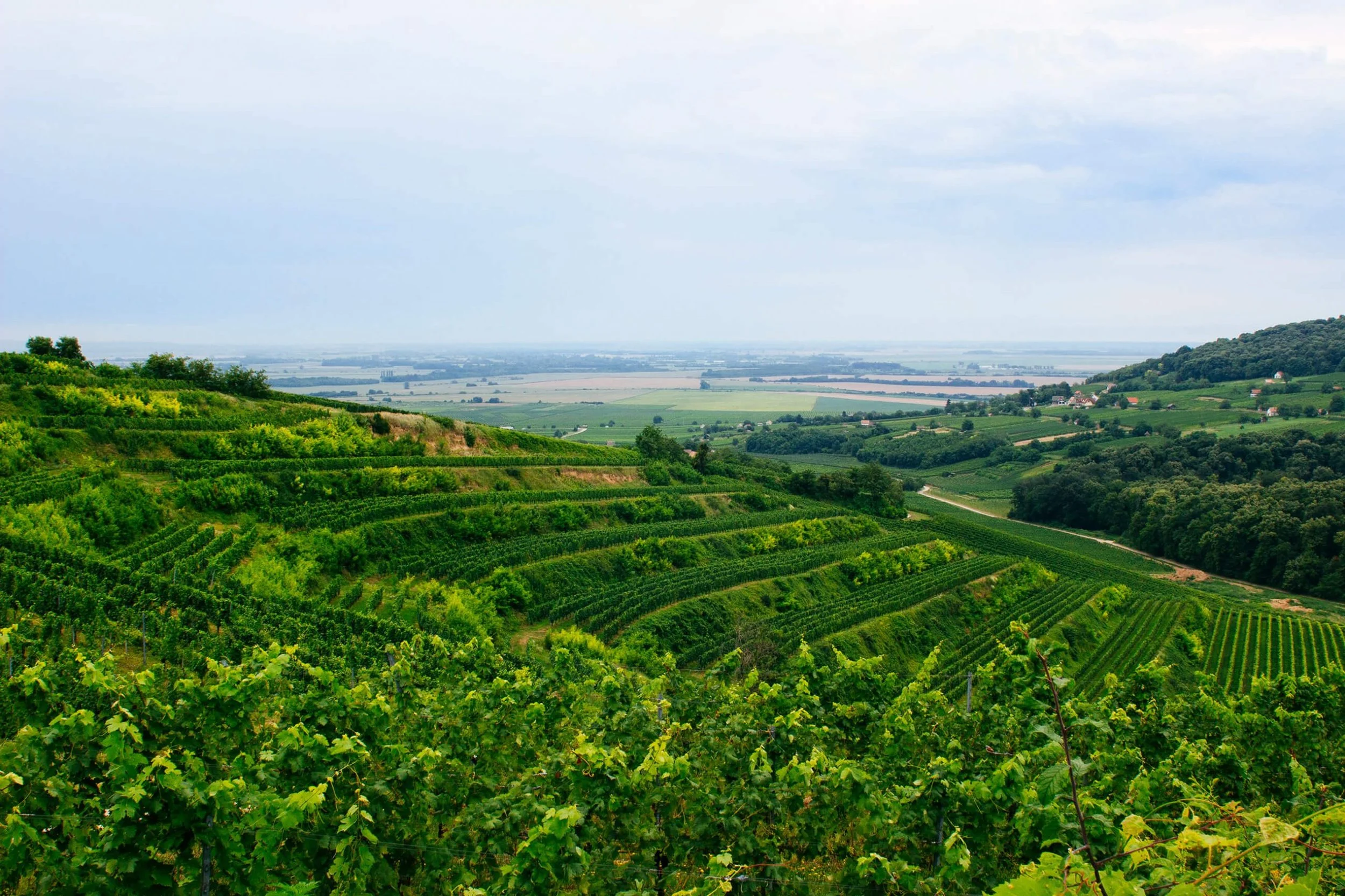
the villany region
Situated in the southernmost tip of Hungary on the eastern flank of the Danube River, the origins of viticulture in this wine region go back to Roman times. The immigration of German speaking Swabians to the region in the 17th and 18th centuries brought significant changes and development both in viticulture and winemaking. The wines of Villany continued to grow in international fame until the interruptions of World War I, II and the establishment of the Iron Curtain led to the collapse of Hungary’s international markets.
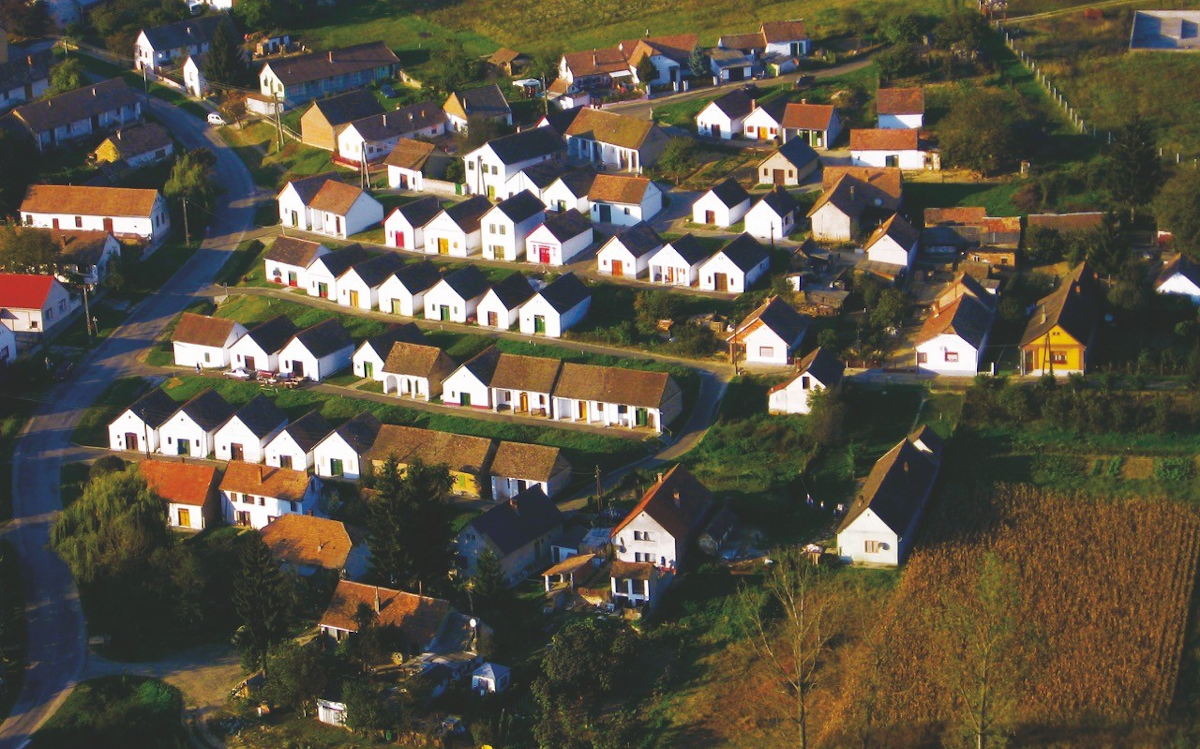
The famed winecellar houses of Villany, built largely by German immigrants centuries ago.
After the fall of the Wall and shortly thereafter, the Soviet Union, family businesses were reestablished. Villány smallholders joined forces and thanks to their efforts to revive old traditions the quality of their bottlings put Villány on level with the best in the world.
Today there are around 6200 acres of vineyards in the hills surrounding Villány and nearby Siklós. In and around Villány more vineyards are planted to red grapes, while in the Siklós area there are more white grapes grown; overall the wine region is best known for its red wines.
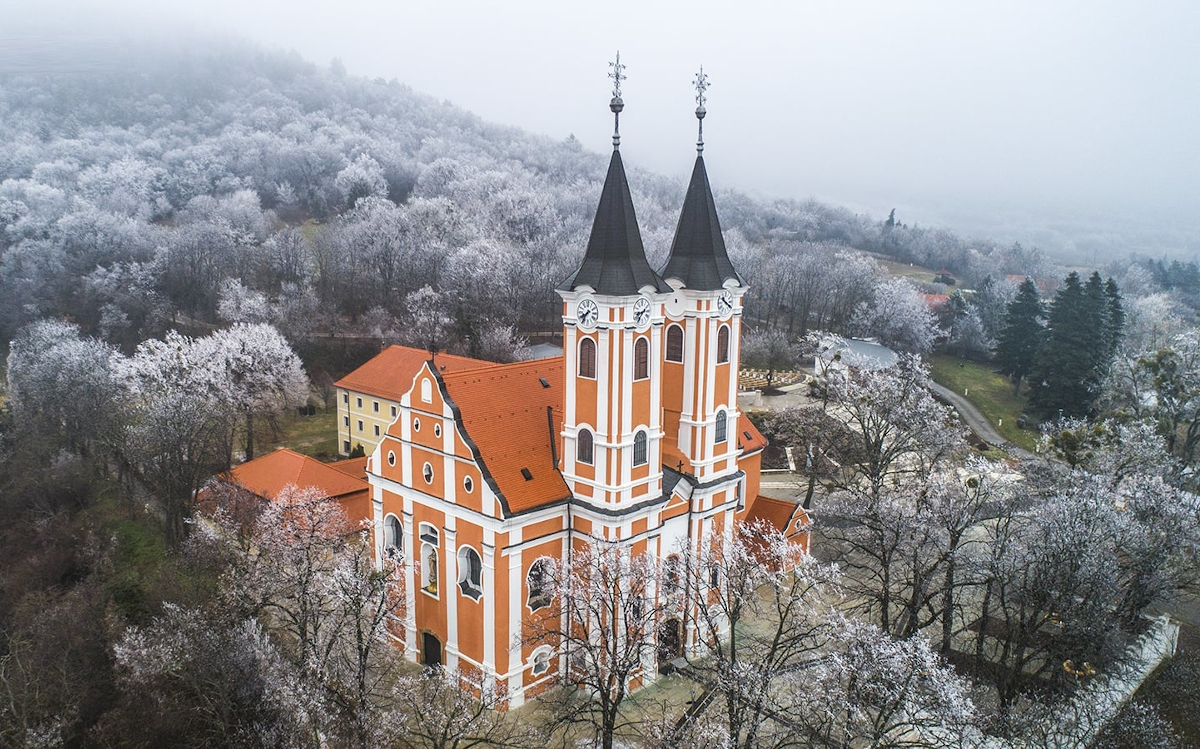
The Church of the Assumption, Mariagyud
Climate & terroir
The wine region’s climate is continental, with some submediterranean influence. In terms of annual average temperature and sunshine hours it boasts the highest figures among all Hungarian wine regions, the warm and dry weather translates into relatively long growing season. The slopes are usually protected from several directions and the heat retained is further enhanced by the warm air coming in from the Mediterranean thus creating a rather unique submediterranean microclimate.
The soil is mainly loess and red clay on limestone bedrock. In some plots loess is mixed with Triassic and Jurassic dolomites and limestone. One of the pecularities of the region is the presence of geothermal heat. On average ground temperature increases by 1 degrees F. every 50ft depth, however in Villány its more like 1 degree F. rise at every 15 ft or so. The whole region is rich in thermal springs and rills, and there are thermal spas dotted all over the countryside.
Varieties in use
The district is planted to a vibrant mix of indigenous and international varieties including Cabernet Franc, Cabernet Sauvignon, Merlot, Portugieser (a light, fruit-driven native of the Danube Valley), Pinot Noir, Syrah, Medoc Noir (aka Menior, Kekmedoc; a deep, velvety variety used in Egri Bikaver), Tempranillo, Kékfrankos (aka Blaufrankisch, Lemberger), and Fekete Járdovány (aka Black Járdovány, a nearly extinct Carpathian grape resurrected by the A. Gere winery).
a. Gere Winery
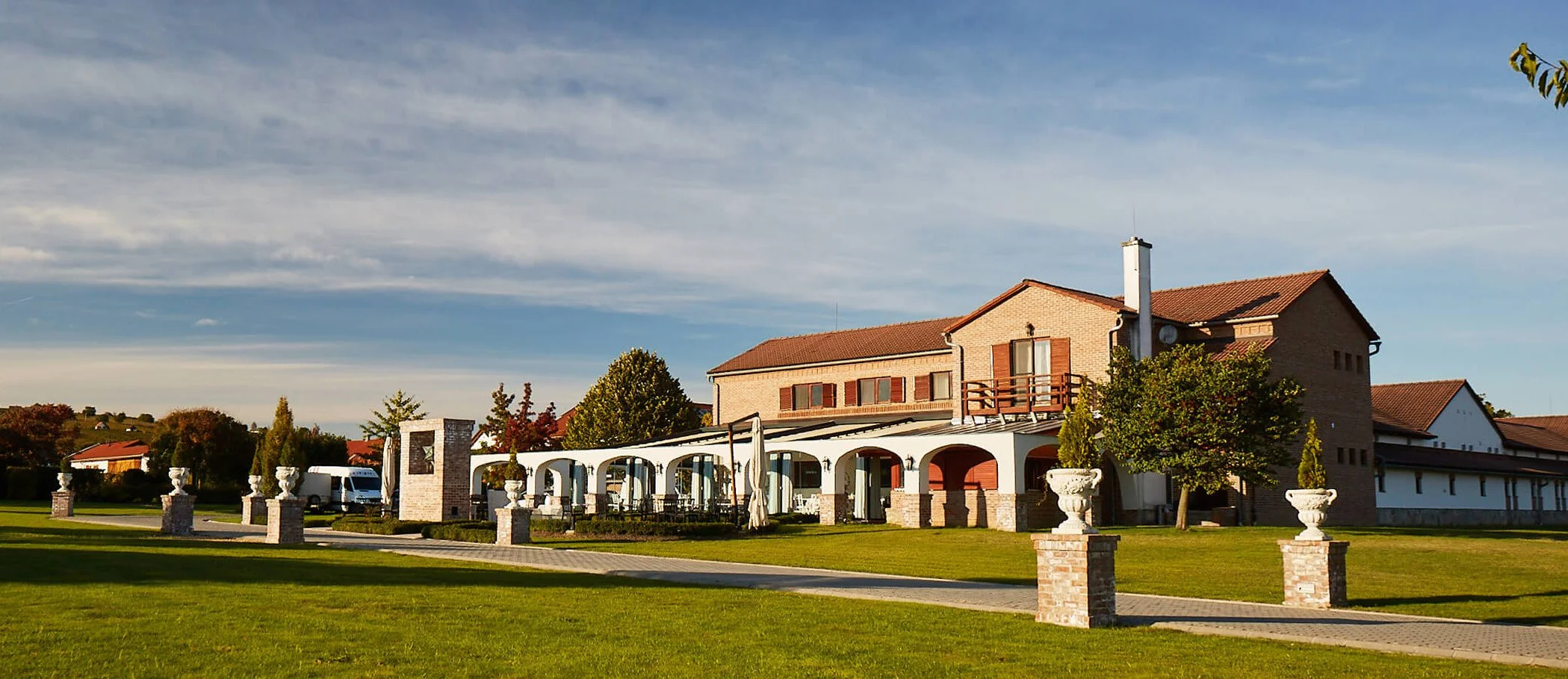
The A. Gere Winery
“The great wines of the Gere winery remain unchanged. That is something non-negotiable. Kopar is Kopar, it is not affected by changing trends. ”
Attila Gere (yes, his name really is Atilla) is an iconic figure in Hungary’s wine scene. Although winemaking in Gere’s family can be traced back at least seven generations. their tradition of winemaking was interrupted by World War II and then by the postwar Communist regime’s restrictions. The Gere family established the Gere Winery just after the fall of the Communist government in 1991.
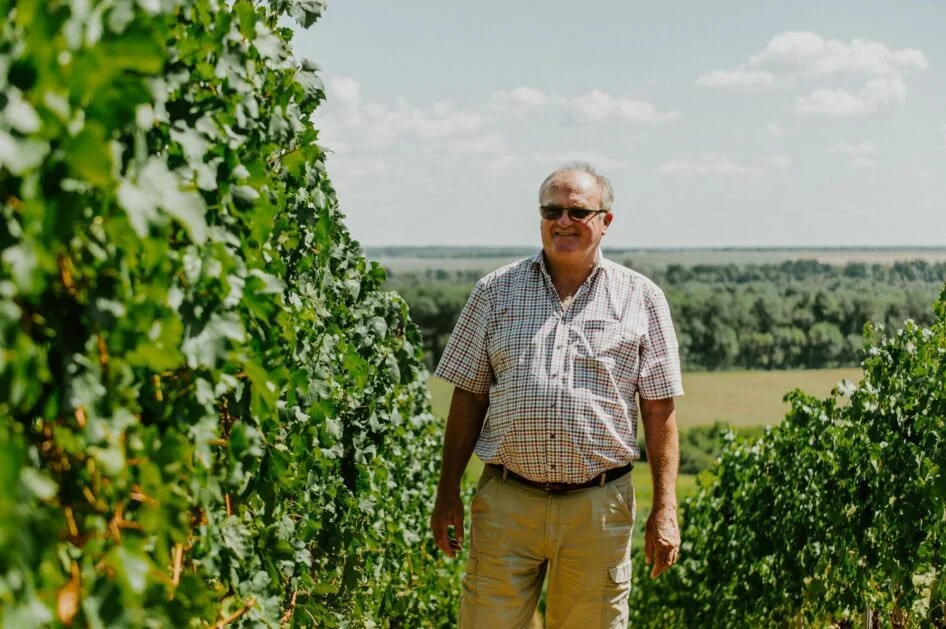
Atilla Gere
The Gere Winery has been organically farming its 70 hectares of vineyards since 2010, and they are experimenting with varieties which are unusual to the region, such as Tempranillo. They are also growing exciting ancient Carpathian Basin varieties which are close to extinction, such as Fekete Járdovány, Bakator, Purcsin, Csóka, and others. All wines are fermented spontaneously using the indigenous yeasts present on the grapes. This is the epitome of low-intervention winemaking, and Gere is rightly famed as the most important winery in Hungary.
“There is no top quality wine without top quality grapes. We have an uncompromising attitude when it comes to quality, so since 2010 all vineyards belonging to the Gere Attila Family Winery are farmed organically. Our respect for the environment is reflected in the outstanding quality of the harvest: the grapes are healthy, rich in nutrients but free of chemicals.”
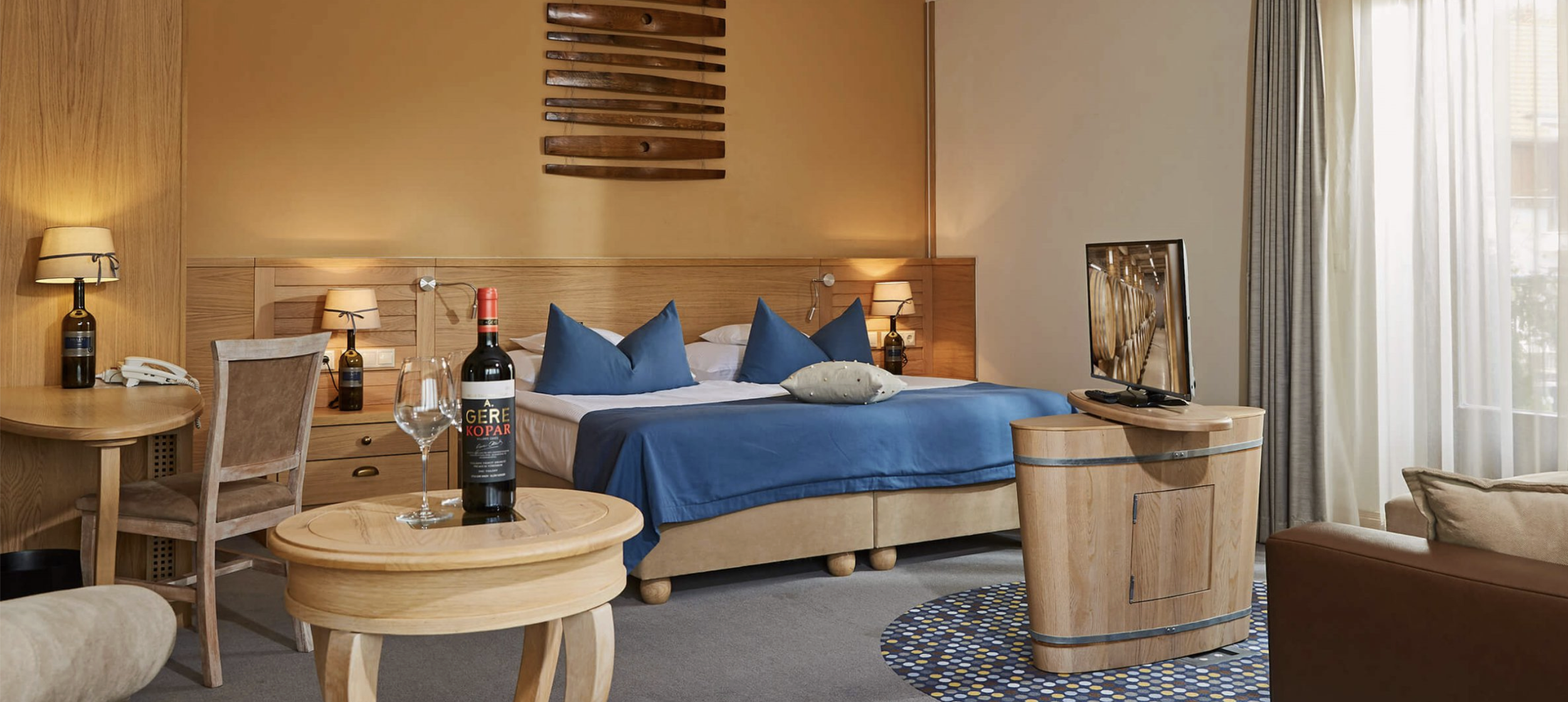
The region’s undisputed star is the Villányi Franc, the local name for the region’s unique Cabernet Franc. Though Cabernet Franc is grown all over the world, the unique terroir, the climate and the winemaking traditions of Villány give a distinct quality to the wines made from this variety. Typically these wines are elegant, complex, rich, powerful, dynamic, spicy and well-structured with zesty acidity, velvety tannins and a great balance. The cool soils and limestone understory also downplay the bell-pepper aromatics prevalent in warmer-climate, sandier-soil Cabernet Franc.
“Cabernet Franc has found its natural home in Villány.”
A. Gere’s Vineyards
Kopár: Widely considered as one of the best crus in Villány, Kopár is situated on the southern slopes of Szársomlyó Hill at elevations of 375-400 ft. between Villány and Nagyharsány. This is the most southernly vineyard in Hungary, and there is no other plot in Hungary that receives more solar input. Bunches here receive sunshine from practically all sides. The huge rock mass of Szársomlyó creates an entirely unique microclimate on these slopes. The heat accumulated during the day is radiated back at night, so the diurnal temperature fluctuation is minimal. Compared to other plots harvest starts two weeks earlier and the grapes are perfectly ripe. The thickness of the soil gradually decreases as one progresses from the foot of the hill upwards. In the uppermost plots there is nothing to cover the limestone bedrock (this is why it’s called ’Kopár’ (barren). The vines up here produce bunches that are smaller, the juice is richer in minerals and is also more concentrated. The site is planted to Cabernet Sauvignon, Cabernet Franc and Merlot.
Konkoly: Situated behind the hill of Szársomlyó Konkoly occupies a protected valley opening in the direction of Nagyharsány. It’s part of the ’Fekete Hegy’ (Black Hill), which covers about 62 acres between 750 to 800ft elevation, and is owned almost exclusively by the Gere Family. It’s rather steep with a gradient between 15-20%, and with a southwest exposure. Despite its excellent potential for vinegrowing it was left uncultivated for forty years; works for recultivation and replantation were started by Gere in 1998 with the first grapes were harvested in 2001. The soil is mainly loess and red clay on limestone-dolomite bedrock. In some plots loess is mixed with Triassic/Jurassic dolomite and limestone. The soils are loose with fist-sized limestone cobblesnall over this plot. These rocks contribute to the mineral quality of the wine. The vineyard is planted to Cabernet Sauvignon, Cabernet Franc, Merlot, Portugieser, and Syrah.
Ördögárok: A site of some 150 acres on a steep slope from 495 to 825 ft elevation between Villány and Nagyharsány. As in the case of Konkoly the soil is mainly loess and red clay on a limestone-dolomite bedding. In some plots loess is mixed with Triassic/Jurassic dolomite and limestone. The soil is vertically layered, so there are several strata of different soil compositions. Being unsuitable for intensive mechanical agriculture it was left uncultivated since the 1970s. Its excellent potential was rediscovered by Attila Gere and he began its replanting in 2001. With a 20-25% gradient, planting Ördögárok (The Devil’s Ditch) required the construction of terraces while maintaining the original soil stratification. The whole area is inside a cauldron-like hollow. Humid, warm air gets trapped, making for a most particular microclimate. Long ago some people even used to craft Kadarka aszús from shrivelled, Botrytised berries grown here. The plots situated at the bottom have different microclimatic conditions from the ones up at the crest and this means that the wines coming from Ördögárok also vary. Gere has planted the vineyard to Cabernet Franc, Merlot, Portugieser, Pinot Noir, Tempranillo, Fekete Járdovány, and Menoir.
Csillagvölgy: This is one of the traditional vineyards where farming has never been discontinued. Csillagvölgy (in Swabian called ’Sterntal’, meaning ’Star Valley’) is situated between Szársomlyó Hill and the town with a southern exposure and it is increasingly steep closer to the top. Altitude is between 560-600ft. This is where the Gere Family had its first tiny holding of a vineyard. In 2005 the winery bought here a larger, 25-acre vineyard and the grapes grown here are destined for the Cabernet Sauvignon and Cabernet Sauvignon Barrique bottlings. The soil is calcareous loam spread over various types of lime-rich soil and rock (loess, weathered marl limestone, dolomite). Csillagvölgy has south-southwest exposure and on the two sides the rows turn southeast and southwest thus creating a tiny valley or channel. This is of utmost importance as the trench steers the cold air away from the higher lying vines and in doing so it reduces the risk of frost. The site is planted to Cabernet Sauvignon, Cabernet Franc, Merlot, Fekete Járdovány, and Menoir
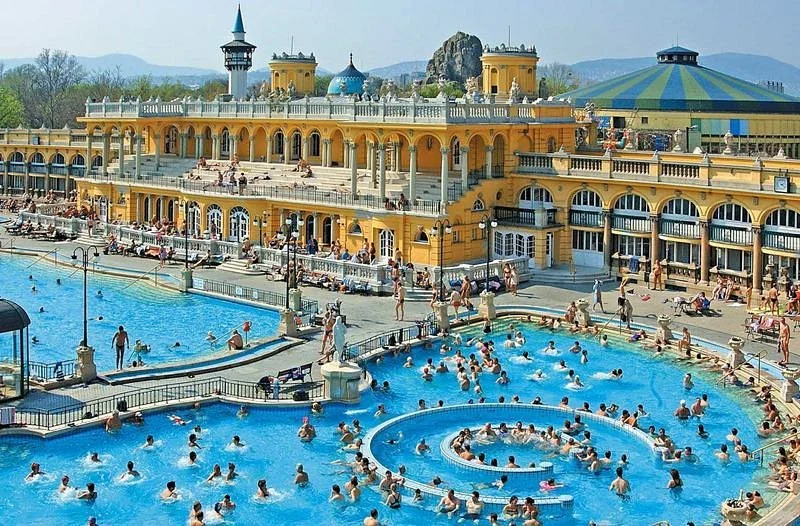
The Szechenyi Baths, Budapest
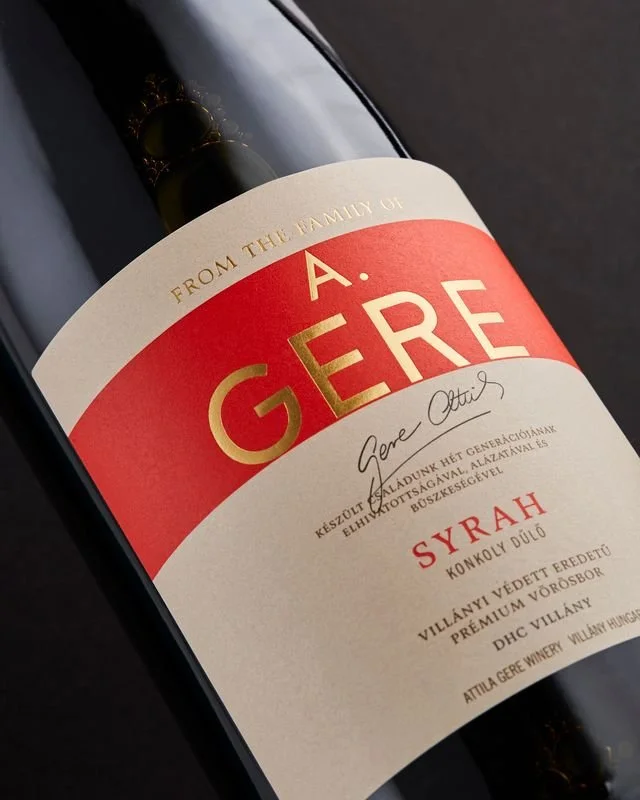
The wines
Syrah DHC Villány: 100% Syrah from the Konkoly vineyard. Fermentation in stainless steel, malo in oak cask followed by ageing in 2nd use Hungarian oak for 16 months. Dark ruby red with purple reflexes. The nose displays forest fruit, strawberries, black pepper and oaky spice. The palate offers black currants and black cherries accompanied by discreet black pepper notes. Softt annins and gentle acidity complement the rich fruit. Ripe and inviting.
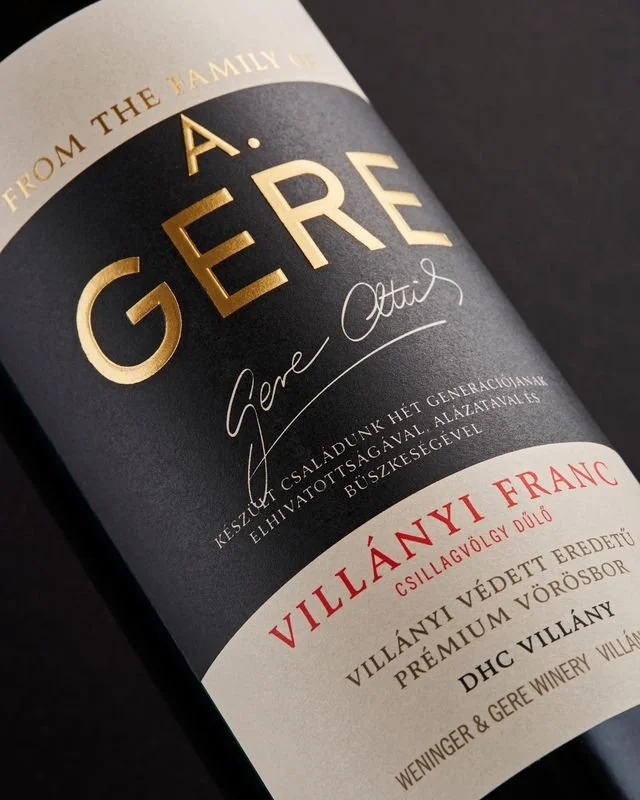
Villányi Franc “Csillagvolgy”: 100% Cabernet Franc from the Csillagvölgy site. Alcoholic and malolactic fermentations in stainless steel tanks. 70% aged in new and 30% in 2nd fill small barrels for 16 months. Opens with blackberry and ripe forest berries, followed by cinnamon, coffee and a hint of clove in the nose. All these culminate in an aromatic finish when tasting. Elegance given by the sweet barrel spices and the vibrant, fruity structure show nice balance. Ripe aromas and fine tannins when young with the structure to age out into a long future.
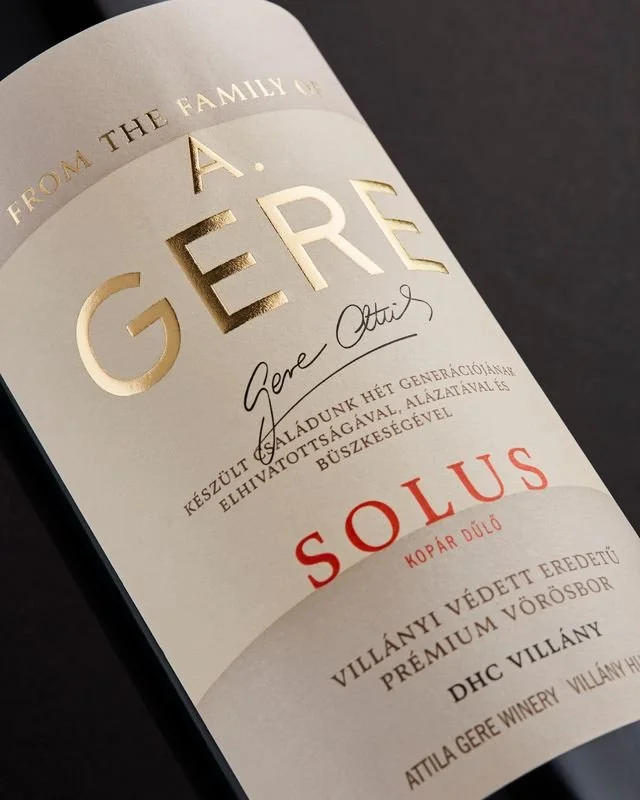
Merlot “Solus” DHC Villány: 100% Merlot from 20-25 year old vines, fermented in large oak tonneaux then put through malolactic in small oak barriques. Aged in small Hungarian oak barrels for another 16 months before bottling. Extremely dark, almost black core with purple tinges at the rim. The slow moving legs indicate high viscosity. Amazing complexity with saline, mineral notes intermingling with fruit and sweet spices. The palate is dominated by aromas of plums, raspberries and sour cherries complemented by notes of dark chocolate and coffee. This is an energetic wine with the suave acidity highlighting the ripe fruit. Firm tannins provide structure and longevity. A wine with great potential for bottle ageing.
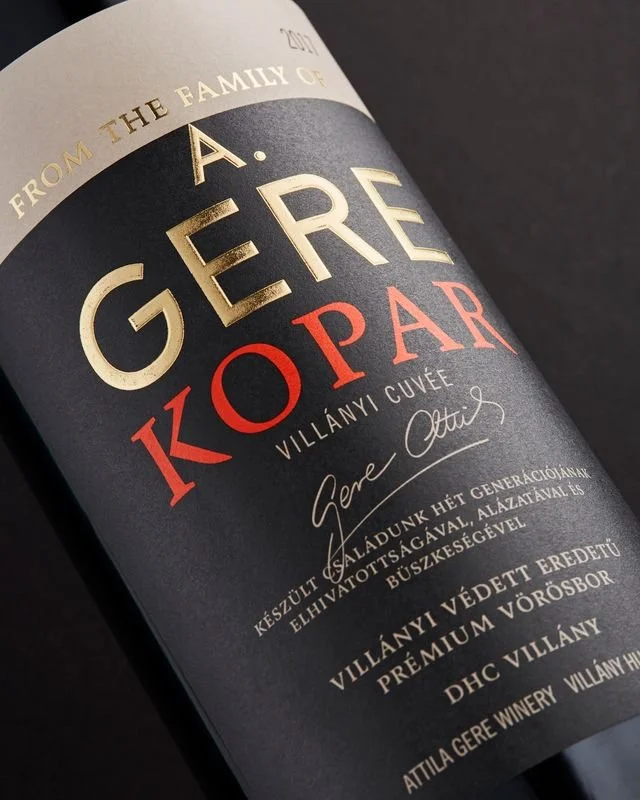
Kopar DHC Villány: A Bordeaux-style blend of about half Cabernet Franc with Cabernet Sauvignon and Merlot. The grapes for Kopar come from four estate-owned vineyards: Konkoly, Ördögárok, Csillagvölgy, and Kopár. The yields are very low, which allows more barrel aging, and results in a more complex wine. Depending on the vintage, most of the blend is aged for 16 to 20 months in mostly small, new Hungarian oak barrels. Currently about 20 percent of the blend is aged in larger and older barrels.
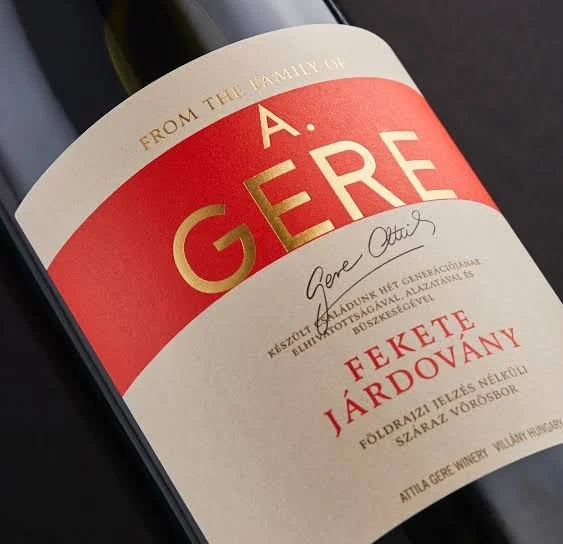
Fekete Jardovany: 100% Fekete Jardovany from the Csillagvölgy and Ördögáro sites. Vinified in stainless, no malo, then 10 months ageing in small 2nd use Hungarian oak casks. The color is a youthful, purple-toned shade with purple highlights. The aroma is spicy, berry-toned and very lively. The taste is mainly coffee, cherries, currants, white pepper. the wine shows a pleasant acidity combined with definite tannins, with a succulent long-lasting fruity finish.